

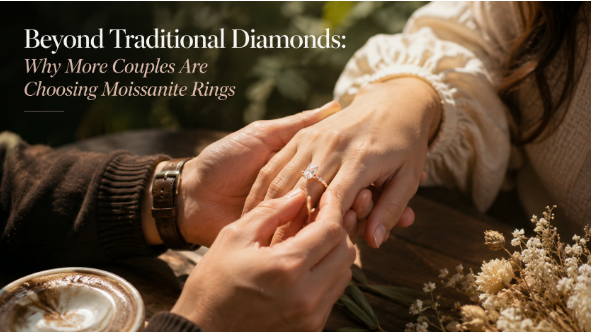
Traditional diamond engagement rings still hold a strong place in bridal culture, but they are no longer the automatic choice for every couple. Younger buyers are approaching engagement rings differently today. Instead of focusing only on tradition or status, many are thinking more about lifestyle, financial priorities, and personal style.
More couples are also questioning what they actually want from an engagement ring in the first place. Among those alternatives, moissanite rings have become one of the fastest-growing choices for couples who still want a beautiful engagement ring without following every traditional expectation tied to diamonds.
The change is not just about budget. It reflects a broader shift in how modern couples think about engagement, marriage, and long-term priorities.
Why More Couples Are Rethinking Traditional Diamond Engagement Rings
For a long time, traditional diamond engagement rings followed a fairly fixed formula. Bigger diamonds, higher prices, and classic bridal styles were often treated as the standard.
That expectation no longer feels right for everyone. Many couples today are balancing weddings with rent, savings, travel plans, or future home purchases, which has changed the way engagement rings are viewed and prioritized.
As a result, non-traditional engagement rings have become far more common in recent years. Moissanite, lab-grown diamonds, and other non-traditional engagement ring options are no longer viewed as niche choices. They are becoming part of mainstream engagement culture.
Why Moissanite Rings Have Become One of the Most Popular Alternatives
For many couples, moissanite feels less like a compromise and more like a modern alternative that better fits their priorities.
Brighter Sparkle and a More Expressive Look
One reason people are drawn to moissanite is the sparkle itself. Moissanite is known for its fiery brilliance and rainbow flashes, especially in natural light. Compared to diamonds, it produces more colorful light reflection, which gives it a brighter and more eye-catching appearance.
Some people genuinely prefer that extra brilliance because it feels less traditional and more expressive than the classic white sparkle usually associated with diamonds.
More Freedom in Ring Design
Many couples exploring moissanite rings also like the extra flexibility they offer in design and budget.
Because moissanite costs significantly less than a traditional mined diamond of similar size, larger center stones and more customized engagement ring styles often become much more accessible. Many brands, including Romalar Jewelry, now offer moissanite designs featuring elongated cuts, vintage-inspired details, and other non-traditional settings that would typically cost far more with a diamond.
Instead of focusing only on carat size, many people are using that flexibility to create rings that feel more personal and unique.
Durable Enough for Everyday Wear
Durability is another reason moissanite works well as an engagement ring stone. On the Mohs hardness scale, moissanite ranks around 9.25, making it one of the hardest gemstones commonly used in jewelry.
That level of hardness makes it resistant to scratching and suitable for long-term daily wear, which matters for people planning to wear their engagement ring every day instead of only on special occasions.
Moissanite also maintains its sparkle well over time and does not easily become cloudy, which adds to its appeal as a low-maintenance engagement ring option.
A More Budget-Friendly Alternative to Traditional Diamonds
Another reason moissanite continues to grow is the price difference compared to traditional diamonds.
Many couples realize they can choose a larger stone or a more customized ring design without reaching the price point of a mined diamond ring. For some, that means spending less overall. For others, it means putting more money toward a future home, travel, or other long-term priorities together.
That shift also reflects a broader change in how younger couples think about spending. Instead of automatically putting most of the budget into a ring, many are becoming more intentional about where their money goes and choosing to invest more heavily in the parts of life they personally value most.

Why Many Couples Still Compare Moissanite vs Lab-Grown Diamond
Even though moissanite has become much more mainstream, many couples still spend time researching moissanite vs lab-grown diamond before making a final decision.
The reason is simple: both offer an alternative to traditional diamonds, but they appeal to slightly different priorities.
Lab-grown diamonds usually attract couples who still want the classic diamond look and traditional engagement ring feel. They offer the same physical and chemical structure as mined diamonds, which makes them appealing to people who still care strongly about the “real diamond” experience.
Moissanite tends to attract people who are more comfortable moving away from traditional expectations entirely. The sparkle is different, the identity feels different, and the appeal is often tied more closely to flexibility, individuality, and lifestyle fit.
The emotional difference between the two matters more than most technical comparisons.
If having a traditional diamond appearance matters most, lab-grown diamonds often feel like the more natural choice. If flexibility, bold sparkle, and non-traditional style matter more, many couples naturally lean toward moissanite instead.
What Engagement Rings Actually Represent Today
One of the biggest changes in the engagement ring market is that couples are becoming much more comfortable defining value for themselves.
Younger buyers today care more about:
- financial flexibility
- personalization
- everyday comfort
- intentional spending
- long-term lifestyle fit
That shift explains why alternative engagement rings continue to grow in popularity. Instead of asking what an engagement ring is “supposed” to look like, more couples are starting with a different question: what actually fits the life they want to build together?
A decade ago, non-traditional engagement rings still felt relatively niche. Today, they are becoming part of mainstream bridal culture.
More couples now care less about following tradition perfectly and more about choosing a ring that actually fits the life they want to build together.
 admin
admin