

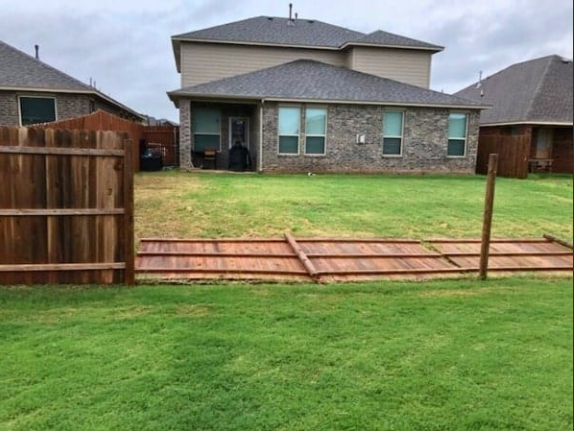
What to Do When a Fence Comes Down
Fence damage almost never arrives on a convenient schedule. It shows up after an overnight windstorm, or a driver misjudges an alley entrance, or a limb that looked fine for twenty years lands across the property line at two in the morning.
What happens in the following day or two has a surprising effect on how much the repair eventually costs and how much of it someone else pays for. Most of the money lost after fence damage is not lost in the original event. It is lost in the cleanup, in the missing documentation, and in the temporary fix that turns a section repair into a full replacement.
The First Hour Is About Safety
Before anyone assesses the fence, a short list of hazards deserves attention.
- Downed utility lines anywhere near the fence line, which should be treated as live and reported rather than approached
- Leaning trees or hanging limbs above the damaged area, since the next piece often falls during cleanup
- Pets and children, who now have an opening that did not exist yesterday and will find it faster than expected
- A pool or other hazard that the fence was serving as a barrier for, which becomes an urgent problem rather than an inconvenience
- Sharp metal, broken glass, and protruding fasteners in the debris field
- Sections still standing but destabilized, which can come down on someone inspecting them
The pool situation deserves emphasis. Where a fence functions as a required safety barrier, a breach is a liability exposure and often a code issue from the moment it opens. Temporary secure fencing is the appropriate response, not a plan to get to it next week.
Document Before Cleaning Up
The instinct after damage is to clear the mess. That instinct costs people money.
Photographs taken before anything is moved are the evidence base for an insurance claim, a claim against a driver, or a conversation with a neighbor. Once the debris is stacked at the curb, the record of what happened is gone.
Worth capturing:
- Wide shots showing the full damaged run and its relationship to the house, the property line, and whatever caused the damage
- Close shots of every broken component, including posts at ground level where the failure point usually is
- The cause itself, whether a fallen tree still in place, tire tracks, or debris
- Any undamaged sections, which establish what the fence looked like and supports the case for matching materials
- The date, which most phones record automatically but which is worth confirming
If a vehicle was involved, a police report is worth filing even when the driver is cooperative and apologetic, because cooperation sometimes evaporates once a repair estimate arrives. Exchange insurance information the way you would after any collision.
Who Pays When a Neighbor’s Tree Falls
This is the most common dispute after storm damage, and the general principle surprises people.
When a healthy tree falls during a storm, it is typically treated as an act of nature, and each property owner’s own insurance generally addresses damage on their own property regardless of where the tree grew. The neighbor is not automatically responsible simply because the tree was rooted on their side of the line.
Where that changes is negligence. If the tree was visibly dead, diseased, or hazardous, and the owner had been notified or reasonably should have known, responsibility can shift. This is why documented notice matters: a dated written message about a leaning or dying tree, sent before anything happens, is a materially different position than a verbal mention nobody recorded.
These are general principles rather than legal advice, and outcomes depend on policy language, the specific facts, and applicable law. The insurance carrier is the first call, and anything contested is worth a conversation with an attorney rather than a debate over the fence line.
What Insurance Typically Covers
Fences are usually treated as a detached structure under a homeowners policy, often covered at a percentage of the dwelling limit rather than at replacement cost for the fence specifically. That distinction matters on a long run of custom ironwork or cedar.
Sudden damage from a covered peril generally qualifies. Deterioration, rot, rust, and posts that failed from age generally do not, since carriers treat those as maintenance. A fence that was already leaning before the storm complicates the claim, which is another argument for having older photographs on file.
Two practical points. Depreciation may apply to an older fence, so the settlement can fall short of what a new equivalent costs. And a small claim on a modest repair may not be worth filing once the deductible and the effect on future premiums are considered. Getting a repair estimate before deciding whether to file is the sensible order.
Temporary Stabilization Without Making It Worse
Most policies expect the owner to take reasonable steps to prevent further damage, so temporary measures are appropriate and usually reimbursable. Keep the receipts.
What helps: bracing leaning sections so they do not fall completely, closing openings with temporary fencing where containment or safety requires it, moving debris off the fence rather than out of the yard, and covering exposed hardware.
What causes problems: cutting damaged sections apart for easier disposal, which destroys evidence and can eliminate salvageable components. Screwing temporary bracing directly through sound pickets or rails, which creates new damage in undamaged material. And driving temporary stakes without knowing what is underground, since utility locates apply to a temporary post as much as a permanent one.
Scoping the Repair
The assessment that follows should cover more than what visibly broke. Force applied to one section travels through the fence, so posts adjacent to the damage often need checking even when they look untouched. On rigid materials, a post that shifted under impact will show up later as a section that no longer lines up.
Matching is the other consideration. A repair on an established fence needs materials and finish that read as continuous with what remains, which is straightforward on chain link and considerably less so on weathered wood or a custom iron pattern. Ornamental ironwork in particular may need components fabricated to match rather than ordered, which is why a repair contractor who also fabricates has an advantage on older fences.
Americana Iron Works & Fence provides fence repair services in Chicago across wrought iron, wood, aluminum, and chain link, including structural reinforcement, rust removal, and repairs matched to the existing fence style. Whoever handles the work, the questions worth asking are whether adjacent posts were checked, how the new material will be matched to the old, and whether any part of the run is better replaced than repaired.
The Mismatch Problem
Repairing a section of an old fence solves the structural problem and sometimes creates a visual one. New cedar next to eight-year-old cedar is obvious for a couple of seasons. Fresh coating on one iron section reads brighter than the rest. Chain link fabric replaced in one bay can differ in tone from the surrounding runs.
There are reasonable answers. New material can be finished to blend rather than left raw. On wood, refinishing the entire run after the repair evens the appearance. On a fence with several years left in it and damage across multiple sections, replacing the full run sometimes costs less than the repair plus the cosmetic work needed to make it disappear.
The judgment call is between repairing what broke and accepting a visible seam, or spending more for a consistent result. Neither is wrong. It should be a decision rather than a surprise, which means raising it before the work starts.
Key Takeaways
- Address hazards first, particularly downed lines, unstable sections, and any breach in a pool barrier.
- Photograph everything before moving debris, since cleanup destroys the evidence a claim depends on.
- File a police report when a vehicle is involved, even if the driver seems cooperative.
- A healthy tree falling in a storm is generally each owner’s own insurance problem; documented prior notice about a hazardous tree changes the analysis.
- Fences are usually covered as a detached structure at a percentage of the dwelling limit, and deterioration is generally excluded.
- Temporary stabilization is expected and often reimbursable, but do not cut damaged sections apart before the claim is assessed.
- Have adjacent posts checked, since impact travels beyond the section that visibly failed.
Frequently Asked Questions
Should I get repair estimates before calling my insurer?
Usually yes. An estimate tells you whether the repair exceeds the deductible by enough to justify filing, and it gives you a figure to compare against the adjuster’s assessment. Photographs and the estimate together make for a much shorter claim conversation.
How quickly should a damaged fence be repaired?
Safety breaches, meaning pool barriers, pet containment, and anything creating a hazard, should be addressed immediately with temporary measures. The permanent repair can follow the claim process. Leaving a partially collapsed fence indefinitely risks further damage in the next weather event, which carriers may view unfavorably.
Can a single post be replaced without rebuilding the section?
Often yes. On most fence types a failed post can be replaced while the adjoining panels are supported, which is far cheaper than rebuilding. It becomes less practical when several posts along a run have failed together, since the labor of doing them individually approaches the cost of a proper rebuild.
What if the damaged fence sits on the property line?
Boundary fences introduce shared-responsibility questions that depend on how the fence was originally established and any agreement between the parties. A current survey establishes where the line actually runs, which is worth having before the conversation rather than during it. Reaching a written understanding on cost sharing before work begins prevents the more expensive dispute later.
Will a repair look obviously different from the rest of the fence?
Some difference is normal at first because new material has not weathered. Finishing the new section to blend, or refinishing the full run after the repair, closes most of the gap. On custom ironwork, matching depends on whether the contractor can fabricate components to the existing pattern rather than substituting stock parts.
Does a fence repair require a permit?
Repairs in kind usually do not, while replacement, a change in height, or a change in location can. Requirements vary across Chicago and surrounding municipalities, so it is worth a quick confirmation with the building department, particularly if the repair is extensive enough to resemble a rebuild.
Conclusion
A fence coming down is an unwelcome expense, but it is one where the owner’s decisions in the first day or two carry real weight. Photographs taken before cleanup, a report filed when a vehicle was involved, temporary work that stabilizes without destroying evidence, and an assessment that looks past the obviously broken section all shift the outcome. The storm set the damage. Most of what follows is still up to the owner.