

When you hear the term “Asian Magazine,” what comes to mind? For many, it evokes glossy pages filled with the latest fashion from Tokyo, deep-dive political analyses from Singapore, or cinematic reviews from Mumbai. However, in the 21st century, an Asian Magazine is no longer a static product. It is a dynamic, cross-platform ecosystem that bridges the gap between Eastern traditions and Western modernity.
From the bustling streets of Jakarta to the digital screens of Los Angeles’s Koreatown, Asian magazines have become powerful arbiters of taste, identity, and news. They are not just selling articles; they are selling a worldview. This article explores the remarkable journey of the Asian magazine industry, its digital transformation, and why it remains a vital force in global media.
A Historical Glimpse: The Golden Age of Asian Print Media
Before the internet, the Asian magazine landscape was dominated by a few heavyweights. Publications like The Far Eastern Economic Review (founded 1946) served as the “Asian Wall Street Journal,” dictating financial policy discussions. Simultaneously, lifestyle magazines such as Female (Malaysia) and Rupal (India) catered to the burgeoning middle class.
The Colonial Influence and Post-Independence Voice
Initially, many Asian magazines were colonial imports. However, post-1950s independence movements sparked a wave of indigenous publishing. Countries like Japan led the charge with Shiseido’s beauty magazines and Weekly Bunshun, proving that local content could outsell Western imports.
By the 1980s and 1990s, the “Asian Tiger” economies (South Korea, Taiwan, Hong Kong, Singapore) saw an explosion of luxury and lifestyle magazines. These publications were status symbols. Holding a thick copy of Harper’s Bazaar (Asia edition) or Preview (Singapore) signified that you were modern, wealthy, and connected.
The Pivot to Digital: How Asian Magazines Reinvented Themselves
The arrival of the smartphone in the late 2000s was an existential threat. Ad revenues plummeted, and newsstands closed. But survival demanded reinvention. Asian magazines did not just “shrink” their print editions for the web; they evolved.
The Birth of “Clickable Culture”
South Korean magazines like Singles and GQ Korea were pioneers. They realized that the digital space allowed for immediacy. Instead of waiting a month for a fashion spread, readers could see Instagram Reels of the shoot the same day.
The Rise of Digital-First Asian Magazines
Perhaps the most significant shift was the birth of digital-native Asian magazines. Brown Girl Magazine (South Asian diaspora) and Rice Media (Singapore) started as blogs and grew into full-fledged newsrooms. These entities operate without print costs, focusing on video essays, podcasts, and newsletters. They proved that the soul of an “Asian Magazine” exists in its brand ethos, not its paper stock.
Key Categories of Asian Magazines (With Examples)
To understand the market, we must segment it. The term “Asian Magazine” is too broad; it encompasses vastly different genres.
| Category | Focus Area | Notable Examples |
|---|---|---|
| Luxury & Fashion | High-end couture, watch reviews, celebrity interviews | Vogue Singapore, L’Officiel Malaysia, Numéro Tokyo |
| News & Politics | Geopolitics, economic policy, investigative journalism | Nikkei Asia, The Diplomat, Caravan (India) |
| Lifestyle & Health | Wellness, parenting, local travel | HealthToday (India), Says (Malaysia) |
| Men’s & Women’s Interest | Dating advice, career hacks, beauty tutorials | Cleo (Asia ed), Men’s Folio (Singapore) |
| Niche/Hobby | Anime, K-pop, Gaming | Anime News Network Magazine (defunct but legacy), Haru (K-culture) |
Analysis: The fastest growing sector today is Niche Digital. Magazines focusing solely on “Bali real estate” or “Thai street food” outperform general lifestyle titles because they target specific Google searches.
Why Asian Magazines Matter in a Globalized World
In an era where “cancel culture” and misinformation run rampant, authentic Asian magazines serve three critical functions.
A. Countering the Western Gaze
For decades, Western media told Asia’s story (e.g., “poverty porn” or “martial arts mysticism”). Asian magazines provide self-representation. When Tokyo Weekender writes about nightlife, it is from the perspective of locals, not tourists. This authentic voice is invaluable to global readers seeking truth.
B. The Diaspora Connection
There are over 30 million overseas Chinese, 2.5 million Koreans in the US, and millions of Indians in the UK. Magazines like The Juggernaut (South Asian) and Kore Asian Media serve as cultural lifelines. They help second-generation immigrants understand their heritage while navigating Western society.
C. Economic Powerhouses
The Asian magazine industry is a billion-dollar ecosystem. Luxury brands like Gucci and Chanel spend up to 40% of their Asian marketing budgets on magazine partnerships—not just ads, but sponsored editorial “native content.”
Challenges Facing the Industry Today
Despite its resilience, the Asian magazine faces daunting hurdles.
-
The Language Barrier: Unlike Europe, Asia has dozens of major languages (Hindi, Mandarin, Thai, Bahasa). A magazine that works in Manila may fail in Jakarta. Localization is expensive.
-
Censorship & Political Pressure: In countries with strict press laws (China, Vietnam, sometimes Singapore), magazines self-censor. Investigative journalism is risky, leading to a “fluffy” lifestyle focus.
-
The Ad Block Crisis: Digital ad revenue is volatile. While print ads once paid the bills, today’s readers use ad blockers. Many Asian magazines have shifted to Substack-style paid newsletters or merchandise to survive.
The Future: Niche Content, AI, and Hyperlocal Voices
What will the Asian Magazine look like in 2030? Three trends dominate.
Hyper-Localization
Readers are tired of generic “Asia Top 10” lists. Future success lies in hyper-local titles. Example: Saigoneer (focused solely on Ho Chi Minh City) or Penang Monthly. These offer depth that AI aggregators cannot replicate.
AI-Augmented Content
Artificial Intelligence is a tool, not a replacement. Asian magazines are using AI to translate articles instantly (e.g., English to Japanese), allowing a single editorial piece to reach 4 different language markets without hiring four translators.
Video-First Magazines
Print is dead? Not quite. But “Magazine as a Video Series” is rising. Vice Asia (before its restructuring) pioneered documentary-style journalism. We predict that by 2026, over 60% of “Asian Magazine” consumption will be on YouTube or TikTok as vertical video essays.
Conclusion: The Unstoppable Narrative
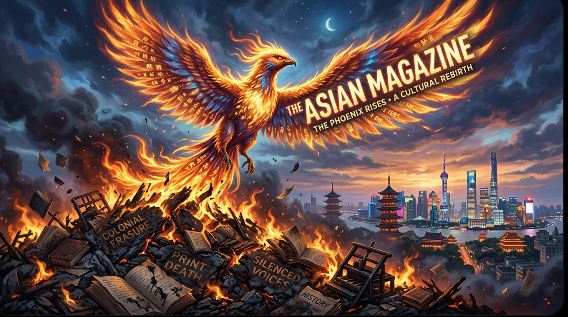
The Asian Magazine is a phoenix. It has burned from the fires of colonial erasure, survived the ink-stained death of print, and is now rising on the wings of digital innovation. Today, whether it is a tactile, artisanal quarterly printed on recycled paper in Kyoto or a daily Substack newsletter read by financiers in Hong Kong, the Asian magazine remains the definitive storyteller of the world’s most dynamic continent.
Asia is not just a location; it is a narrative. And as long as there are stories to tell—about a fashion designer in Seoul, a tech founder in Bangalore, or a chef in Bangkok—there will be a magazine to tell them. The medium may change, but the voice remains uniquely, powerfully Asian.
FAQs:
Q1: Is print completely dead for Asian Magazines?
A: No. While mass-market print is dying, boutique print is thriving. Limited-edition, high-quality print magazines (like Suitcase or LOST) are sold as luxury artifacts, priced at 20–30 per issue. Collectors value the tactile experience.
Q2: Which Asian country produces the most magazines?
A: Japan. The Japanese magazine market is the largest in Asia by revenue and variety, ranging from Manga Monthlies selling millions of copies to hyper-specific titles like UOMO (men’s fashion).
Q3: How can I start my own Asian Magazine?
A: Do not start with print. Start a digital-first newsletter on Substack or Beehiiv focused on a niche (e.g., “Korean skincare science”). Build an email list. Once you have 5,000 engaged readers, consider a print “annual edition” or merch.
Q4: Are Asian magazines only in English?
A: No. Many are in local languages (Hindi, Thai, Tagalog, Mandarin). However, English-language Asian magazines are crucial for the export market and the diaspora (e.g., Tatler Asia).
Q5: What is the difference between a “global” magazine (like Time) and an “Asian Magazine”?
A: A global magazine writes about Asia for a world audience. An Asian magazine writes from Asia for an Asian (and global) audience. The perspective, idioms, and cultural references start in Asia.
 Mariah