

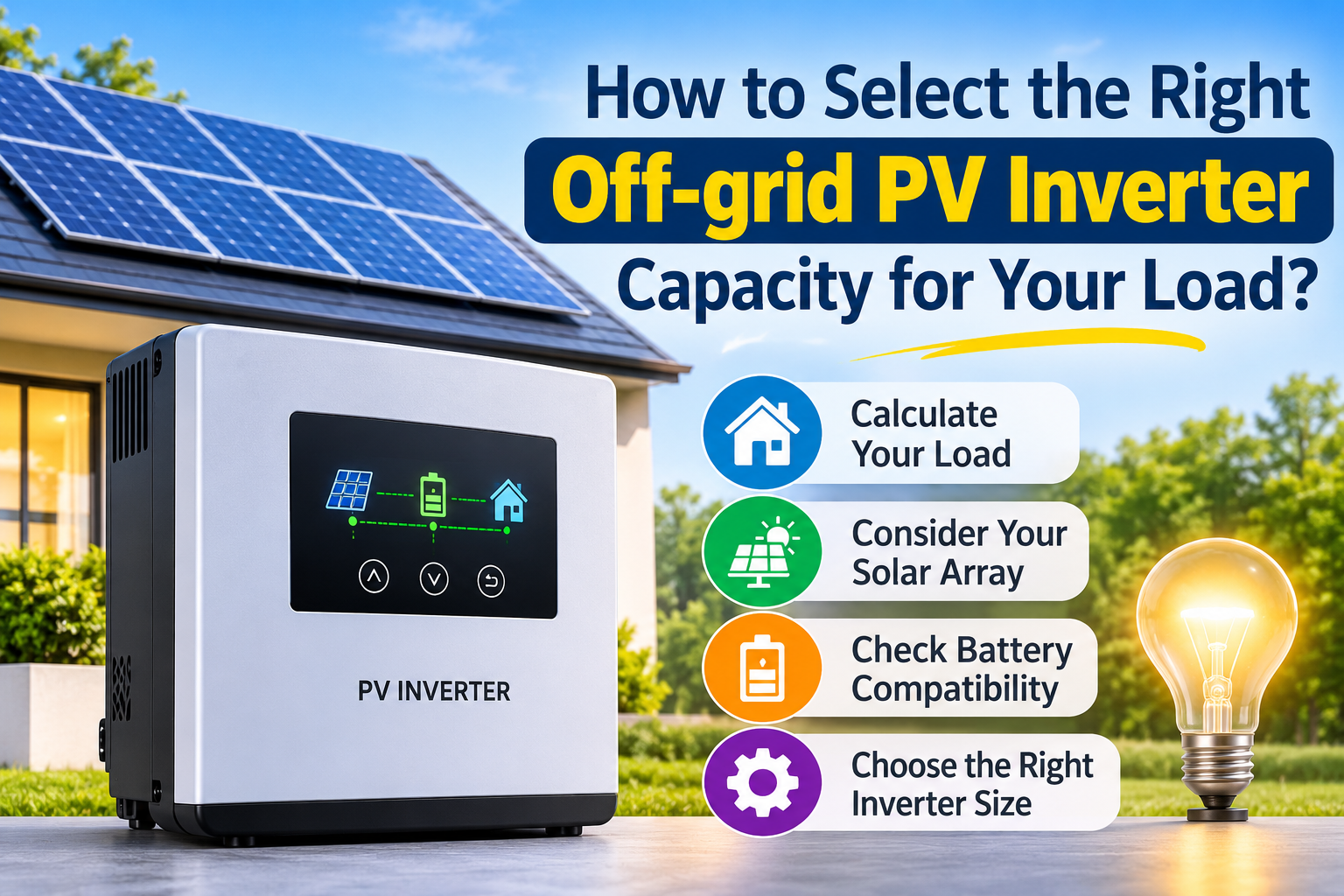
Solar power can support comfortable living, productive work, and dependable energy access across many locations. Every solar installation serves a unique combination of appliances, operating schedules, and energy needs.
The inverter connects solar panels, battery storage, and electrical equipment within this arrangement. Its capacity influences how smoothly multiple appliances can operate together during everyday use.
Choosing an off-grid PV inverter therefore requires a clear understanding of power demand and system compatibility. Accurate calculations can create a balanced system that uses available solar energy efficiently. Let’s explore the essential factors that can guide a suitable inverter capacity selection.
What are the Steps to Determine the Right Inverter Capacity for Your Load?
- Understand Inverter Capacity Ratings
Inverter capacity represents the maximum electrical load that an inverter can supply during operation. Manufacturers usually express this rating in watts, kilowatts, or volt-amperes.
An off-grid PV inverter converts direct current from solar panels or batteries into alternating current for everyday electrical equipment.
Its continuous rating shows the load it can support during regular operation. The surge rating represents the higher temporary output available for starting appliances.
- Create a Complete Appliance Load List
Begin by listing every appliance that the solar system may power. Record the quantity and rated wattage of each item. Product labels, manuals, and manufacturer specifications usually provide this information. These ratings form the foundation of the connected-load calculation.
Next, identify which appliances may operate simultaneously. Add their rated wattages to estimate the total running load placed on the off-grid PV inverter. Appliance ratings vary across products and models. Therefore, the calculation should always reflect the equipment included in the planned installation.
- Account for Appliance Starting Power
Appliances containing motors or compressors may require additional power for several seconds during startup. Refrigerators, pumps, air coolers, and power tools commonly create this demand.
The required starting power varies across appliance models and technologies. Manufacturer specifications provide the most reliable figures for each product. The selected off-grid PV inverter should handle the combined running load and the highest relevant startup demand.
- Add a Practical Capacity Margin
A suitable capacity margin prepares the system for routine changes in electricity consumption. It can also support carefully planned appliance additions. The appropriate margin depends on the load profile, appliance types, startup requirements, and plans.
A qualified installer can assess these factors together. The selected inverter capacity should provide suitable headroom above the calculated running load after accounting for relevant startup requirements.
This margin helps an off-grid PV inverter manage moments when several appliances operate together. It also supports comfortable daily use as requirements evolve. Capacity selection should follow the complete load assessment and the ratings available from the chosen inverter manufacturer.
- Calculate Daily Energy Consumption
Instantaneous load determines inverter capacity, while operating hours influence battery storage and solar-panel requirements. Both calculations help create a coordinated solar installation.
Multiply the wattage of each appliance by its expected daily operating hours. The result represents its daily consumption in watt-hours.
Repeat this calculation for every appliance before adding the results. The combined figure represents the estimated daily energy requirement.
Usage patterns may vary across mornings, afternoons, evenings, and seasons. Recording these patterns provides a clearer view of overall energy demand.
- Match the Inverter With the Battery Bank
The inverter and battery bank should use compatible voltage ratings. Solar systems commonly use configurations based on their capacity and design requirements.
Battery storage should support both the appliance load and planned operating duration. Usable battery capacity also depends on battery technology and manufacturer guidance.
A higher-capacity inverter may draw substantial current from the battery bank. Suitable cables and protection devices help carry this current efficiently.
The off-grid PV inverter must also support the selected battery chemistry and operating voltage range. Compatible components promote coordinated energy flow throughout the system.
- Review Important Inverter Features
Capacity remains the central consideration, while supporting features can improve system management. A clear display can provide useful information about energy flow.
Monitoring functions may show solar generation, battery status, output load, and operating mode. These details support informed energy use throughout the day.
Pure sine-wave output provides a smooth electrical waveform suited to many household and commercial appliances. Product compatibility should follow appliance manufacturer guidance.
An off-grid PV inverter may also include charging controls, protection functions, and selectable operating modes. Feature availability varies across individual models.
Review efficiency, input ranges, environmental ratings, warranty terms, and installation requirements before making the final selection.
Build a Solar System That Supports Energy Needs
Selecting the right inverter capacity creates a strong foundation for everyday convenience and energy planning. A thoughtful assessment connects present appliance habits with wider goals for comfort, productivity, and independence.
Energy solution providers like Eastman Auto & Power Limited can help users explore suitable equipment for homes, farms, shops, offices, and remote applications. Professional guidance can align the off-grid PV inverter with solar panels, batteries, cabling, and protection devices.
This coordinated approach turns individual components into one purposeful energy system. With accurate load information and compatible equipment, users can prepare for changing requirements while making confident use of available solar energy.
 Mariah