

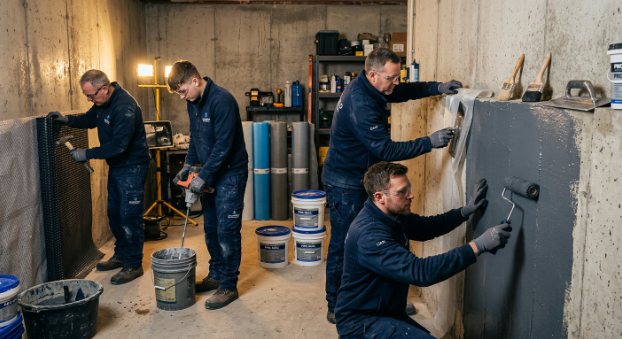
A damp basement does more than create a musty smell—it quietly erodes your home’s foundation, air quality, and resale value. Many homeowners ignore the warning signs until a storm turns a minor seepage problem into a full-blown flood. By then, the repair bill (and the stress) has multiplied.
That’s where professional help makes all the difference. Reliable basement waterproofing experts who protect your home from costly water damage before it starts can spot vulnerabilities long before they become emergencies. At Top Course Masonry Inc, we’ve spent years helping homeowners turn damp, musty basements into dry, usable spaces they’re proud of.
This post walks through the warning signs of basement water damage, the waterproofing methods that actually work, and why choosing the right team matters just as much as choosing the right technique.
Why Does Basement Water Damage Happen in the First Place?
Basements sit below grade, which means they’re surrounded by soil that naturally holds moisture. Over time, hydrostatic pressure builds against your foundation walls, pushing water through even the smallest cracks. Add poor drainage, clogged gutters, or aging foundation materials, and you’ve got a recipe for trouble.
Common culprits include:
- Poor grading around the home that directs rainwater toward the foundation instead of away from it
- Clogged or damaged gutters that overflow and saturate the soil near your foundation walls
- Hydrostatic pressure from groundwater pushing against basement walls and floors
- Cracks in foundation walls or floors that widen over time due to settling
- Outdated or failing sump pumps that can’t keep up during heavy rainfall
Left unaddressed, these issues lead to mold growth, wood rot, foundation instability, and a drop in your home’s market value.
What Are the Warning Signs of a Waterproofing Problem?
You don’t need to wait for standing water to know something’s wrong. Look for these early indicators:
- A persistent musty or earthy smell, even when the basement looks dry
- Visible cracks in walls or flooring, especially ones that seem to grow over time
- White, chalky residue (called efflorescence) on concrete surfaces
- Peeling paint or bubbling drywall near the floor
- Condensation on pipes or windows that doesn’t go away
If any of these sound familiar, it’s worth scheduling an inspection sooner rather than later. Small problems are far cheaper to fix than structural ones.
Which Basement Waterproofing Methods Actually Work?
Not every basement needs the same solution. The right approach depends on your foundation type, soil conditions, and how water is entering your home. Here are the most effective methods we use:
Interior Drainage Systems
An interior French drain channels water that seeps through walls or floors into a sump pump system, which then pumps it away from your home. This method works well for basements with recurring minor leaks and is less invasive than exterior excavation.
Exterior Waterproofing Membranes
For homes dealing with significant hydrostatic pressure, exterior waterproofing involves excavating around the foundation and applying a waterproof membrane directly to the walls. This stops water before it ever reaches your basement, making it one of the most comprehensive long-term solutions available.
Sump Pump Installation and Maintenance
A properly sized sump pump is your basement’s last line of defense during heavy storms. Pairing it with a battery backup ensures your basement stays protected even during power outages.
Crack Injections and Sealants
For isolated cracks, polyurethane or epoxy injections can seal gaps and restore structural integrity without the cost of a full waterproofing overhaul.
Choose interior drainage if your basement experiences occasional seepage and you’re working with a tighter budget. Choose exterior membrane systems if you’re dealing with chronic flooding, high water tables, or you’re already planning foundation repairs—it addresses the root cause rather than managing symptoms.
Why Does Choosing the Right Contractor Matter So Much?
Waterproofing isn’t a one-size-fits-all job, and a poorly executed fix can cost you more in the long run. An inexperienced contractor might patch a visible crack while missing the underlying drainage issue, leaving you with the same problem months later.
At Top Course Masonry Inc, our team evaluates your home’s unique grading, soil composition, and foundation condition before recommending a solution. We don’t believe in upselling services you don’t need, and we stand behind our work with solid warranties because we want you to feel confident in your investment for years to come.
How Top Course Masonry Inc Protects Your Home
Our process starts with a thorough inspection, not a sales pitch. We assess:
- Current drainage patterns around your property
- The condition of your foundation walls and floors
- Signs of past or active water intrusion
- The best waterproofing method for your specific situation
From there, we build a customized plan that fits your budget and timeline, using high-quality materials designed to last through decades of seasonal changes. Our masonry background also means we understand how foundation structure and waterproofing work together, giving you a more complete solution than a waterproofing-only company could offer.
What Should You Do Next?
A dry basement isn’t a luxury—it’s a foundation for a healthier, more valuable home. Whether you’re noticing the first signs of moisture or you’re dealing with a basement that floods every time it rains, waiting rarely makes the problem smaller.
If you’re ready to stop guessing and start protecting your home, reach out to Top Course Masonry Inc for a thorough inspection and an honest recommendation. We’ll help you understand exactly what’s happening beneath your home and how to fix it for good.
Frequently Asked Questions
How much does basement waterproofing typically cost?
Costs vary widely depending on the method used and the extent of the damage. Interior drainage solutions tend to cost less than full exterior excavation and membrane systems. A professional inspection will give you an accurate estimate based on your specific needs.
How long does a basement waterproofing project take?
Interior solutions like French drains and sump pumps can often be completed in one to two days. Exterior waterproofing projects, which involve excavation, may take several days to a week depending on the size of your foundation.
Can I waterproof my basement myself?
DIY sealants and paints can offer temporary relief for minor dampness, but they rarely address the root cause of water intrusion. For long-term protection, a professional assessment is strongly recommended.
Will waterproofing increase my home’s value?
Yes. A dry, usable basement adds livable square footage and removes a major red flag for potential buyers, making your home more attractive at resale.
 admin
admin