

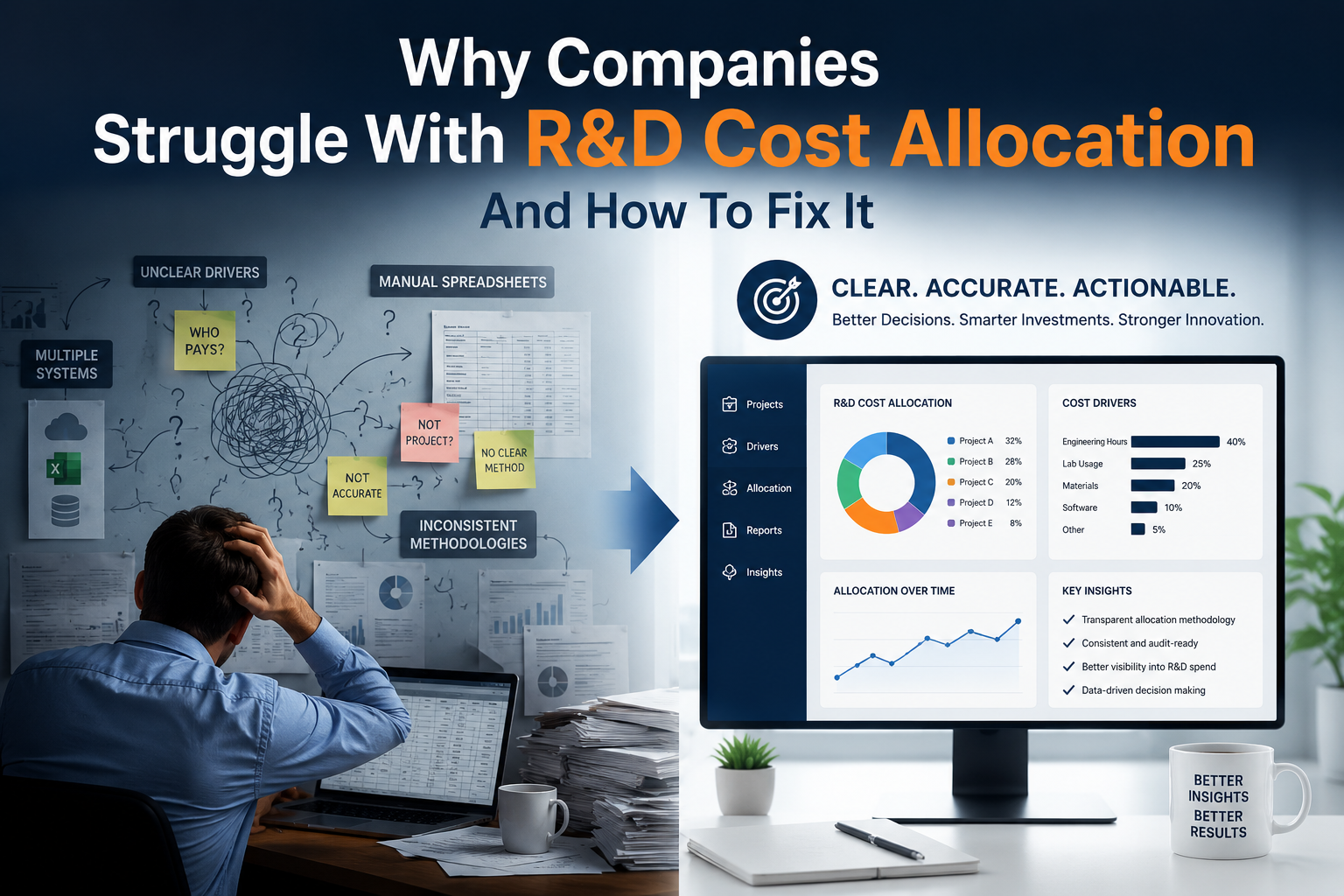
Processes for allocating research and development (R&D) costs are often difficult to manage because research activities do not follow regular spending patterns. Organizations frequently fund multiple experimental projects simultaneously. Each project has changing requirements for resources and outcomes that are not certain – these factors make it hard for staff to assign costs to specific projects, departments or timeframes. Financial reports are sometimes disconnected, which causes uncertainty during budgeting and when leaders make choices. It is important to improve the clarity of these practices to maintain progress in innovation and keep control over finances.
Difficulties in Research Spending
Expenses in R&D environments change frequently and are difficult to put into categories. Staff members often use the same tools, personnel and facilities for different projects – this shared use makes the distinction between direct and indirect costs unclear. If organizations do not track these overlaps, they may categorize spending incorrectly – this error leads to project valuations that are not precise and a misunderstanding of profit levels.
Research also changes as teams discover new information – Projects often change direction, which means that initial estimates for costs become old quickly. When a structured system to update allocations is absent, businesses find it hard to ensure financial records match how they actually use resources.
Disconnected Financial Systems
Many businesses use different systems for engineering, finance and operations – these separate systems create gaps in how much data is visible. It is difficult to track the movement of funds through research stages when information is not in one place – this lack of connection causes delays in reports and increases the chance that staff will record expenses twice or miss them entirely.
Poor communication between departments makes the problems worse. Engineering teams are often focused on technical milestones, while finance teams are focused on how to group costs – these different priorities lead to different ways of explaining spending. Over time, this gap makes it harder to have a single view of R&D results.
Issues with Regulations & Reporting
Rules from governments add more difficulty to R&D cost allocation. Standards for tax incentives and financial reporting require that documents for eligible expenses are very detailed. Organizations that do not keep precise records are at risk of losing financial advantages or having problems during audits. Structured assistance, like SR&ED consulting, is helpful because it assists organizations in following official rules.
Errors in classification are also possible when teams do not have clear rules for costs that are assets versus costs for daily operations. If policies are not the same across the company, financial statements are inconsistent – this lack of consistency makes the finances less transparent. Many businesses use external advisors, like G6 Consulting, to make internal processes stronger and to make reporting structures more accurate.
Ways to Improve Allocation Systems
A better system for allocation starts with methods for tracking costs that are the same for all R&D activities. Companies lower confusion and make it easier to follow finances when they create steady categories for work, supplies and general business costs. Tools that track data as it happens help ensure that staff record expenses immediately – this reduces the need to change records later.
Modern systems rely heavily on technology – Software platforms that connect project management with financial reports allow teams to watch spending with high levels of detail. As an example, G6 Consulting helps organizations set up frameworks that make data more visible – these frameworks help technical and financial teams work together so businesses have better control over their research investments.
Conclusion
Organizations find R&D cost allocation difficult because of separated data, changing research goals and financial methods that are not uniform – these problems result in reports that are not accurate and less efficient when managing budgets for innovation. Accuracy is much higher when organizations use standard processes, talk more across departments and use connected financial systems. Better frameworks improve how companies follow rules and help them make better plans for future research projects.
 Mariah