

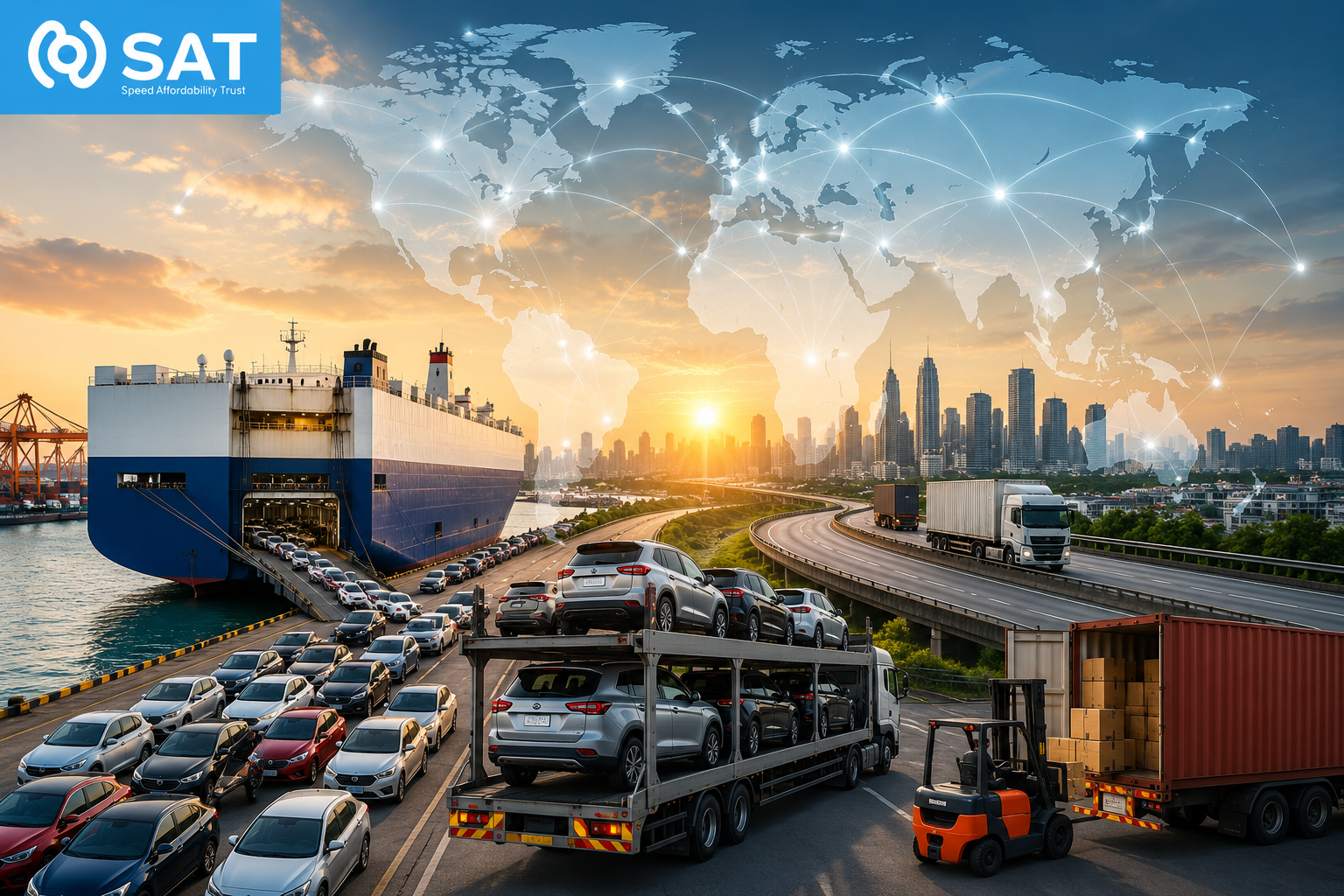
Think you’ve seen the car of your dreams on the other side of the world, and it’s safe to reach your doorstep. That was an impossibility not long ago. Purchasing a vehicle from another country involved a lot of paperwork, a lot of risk, and very few trustworthy choices. All this changed today. Every successful purchase is backed by a formidable chain of International logistics that spans ports, shipping firms, customs offices, and buyers across continents. It does more than move vehicles; it removes distance as a barrier to opportunity. Today’s Global Automotive Marketplace is the invisible network that has broken the geographic barrier to choice. It’s easier to understand the system and to recognize why today’s car purchase isn’t simply about what car to acquire, but rather the journey that brings it to you.
The Automotive Industry Used to Be Limited by Geography
Location for a long time determined the type of vehicle available to purchase. When a model wasn’t sold in your country, there was little chance of owning it. Buyers were limited in their choices, had to pay higher prices, and had to settle for vehicles that did not fully satisfy them. It was still confusing and risky to import a car, even if someone wanted to. Distance wasn’t measured only in miles; it was measured in limited opportunities. As car export and import became more organized, those barriers slowly began to disappear. Better Automotive was one of the companies that revolutionized the automotive industry by connecting various countries. In today’s world, location is less important than ever, as the world is more connected than ever, and doors that were once firmly closed have been opened.
The Seven Logistics Breakthroughs That Changed Everything
The modern car industry did not develop as a result of overnight improvements in the quality of the car. It expanded because of International logistics, which made it quicker, safer, and more reliable to transport them around the world. Each piece of progress was a problem that previously made purchasing an automobile from another nation appear risky. These combined innovations made car ownership a reality for the world.
Standardized Container Shipping
Standardization of containers added to the regularization of shipping. They minimized handling errors, saved valuable vehicles, and helped reduce transport costs for a variety of exports.
RoRo Revolutionized Vehicle Shipping
RoRo (Roll-on/Roll-off) ships enable vehicles to be driven directly on and off the ship. This straightforward solution facilitates Vehicle shipping, lowers the risk of damage, and ensures efficient vehicle handling in congested ports.
Digital Customs Processing
Slow paperwork has been replaced by faster process approvals in modern digital documentation. This speeds up the customs process and minimizes transit delays.
Global Port Networks
Today’s ports operate as a unified logistics system, connecting ships, trucks, inspections, and storage. These links ensure that the Automotive supply chain runs smoothly from start to finish.
Real-Time Shipment Tracking
With live tracking, buyers are updated along the way. Having a car’s location at all times fosters trust and increases the security of international purchases.
Professional Vehicle Inspections
A vehicle is independently inspected prior to shipment. This helps eliminate uncertainty and increases the buyer’s confidence before purchase.
Specialized Auto Transport Services
Dedicated Auto transport services are specially created for the safe transportation of vehicles. Their knowledge has made international car purchasing more reliable than ever before and has become an integral component in present-day automotive logistics.
Why Logistics Became More Important Than Manufacturing
Creating a supercar is just half the work. But if it doesn’t find the right buyer at the right time, its quality doesn’t matter at all. Many manufacturers today can make quality vehicles, but not all can do so in a way that enables them to be easily delivered from one country to another. It’s what Automotive logistics can really help with. It is a well-planned journey that takes care of the vehicle, avoids unnecessary delays, and helps to instill confidence in the buyer from the moment of ordering until the keys are handed over. People often remember the buying process more than the car itself. The speed of delivery, transparency of communication, and attention to detail foster trust that extends beyond the immediate delivery. Today, the best way to remain competitive in the global market isn’t just to make better cars; it’s to create better journeys for each customer.
Inside the Journey of One Imported Car
Before a car is sold to a new owner, there is a story to be told. It all starts with selecting a trustworthy exporter or participating in an auction. Experts check its condition before it departs, verify paperwork, and prepare it for Car export and import. The vehicle is then taken to the port, carefully loaded onto a ship, and tracked throughout its journey across the ocean.
Once the car reaches the destination country, customs officials check the required paperwork before granting entry. May undergo another inspection to comply with local regulations and safety. Ultimately, the car goes to the buyer or dealership and is ready to roll. Each step relies on a robust Automotive supply chain, where being on time, collaborating, and planning are as important as any other aspect of the vehicle. It might seem like one delivery, but it’s really hundreds of little things that have to go right to make it all happen at the end of the day.
How Technology Turned Logistics into a Competitive Advantage
Most buyers don’t see how technology has transformed Automotive logistics. It’s not just a matter of shipping from one nation to another. Smart systems today help companies select faster shipping routes, forecast delays before they occur, and reduce vehicle downtime. This translates to reduced wait times, cost savings, and a hassle-free process for all parties involved.
Real-time tracking allows customers to monitor their vehicle’s progress in transit, and digital documents enable faster customs clearance and minimize errors in paperwork. Some logistics companies even incorporate sensors to track vehicle locations and status in transit, providing yet another level of assurance. These innovations not only drive efficiency but also create trust. Today’s competitive global marketplace is not just about moving cars faster; it’s about using technology wisely. They enhance the buyer’s experience, making logistics a strong competitive edge for repeat business.
The Hidden Challenges Behind Every International Vehicle Shipment
Each and every successful vehicle delivery comes with many problems that most vehicle owners do not even realize. The smooth arrival of a car is not by chance. It is the result of careful planning, rapid decision-making, and constant communication among all the players in the logistics network. Each shipment is under the careful hands of professionals working together to prevent issues before they escalate into greater delays.
- Adjustments to import legislation: each country has specific rules regarding taxes, emissions, and necessary paperwork. A small change can make a difference to delivery time.
- Weather conditions: Strong winds, heavy rain, or turbulent seas may cause delays for ships and alter routes to ensure vehicles remain safe.
- Busy ports and shipping delays: If the port is busy with vehicles, they might have to wait before they can be loaded or unloaded.
- Customs documentation accuracy: If documents are missing due to incorrect information, it can cause delays in customs clearance and the shipment.
- Vehicle protection in transit: Cars need to be handled well to avoid scratches, dents, or damage between the levels of transport.
- Information flow and coordination: Exporters, shipping companies, customs authorities, and transport groups need to be in constant information flow and coordination. Clear communication ensures the process stays on track and uninterrupted.
The best logistics providers are ready for these challenges and can help the buyer get their vehicles delivered with less stress and fewer unexpected issues.
Why Buyers Trust Global Car Marketplaces More Than Ever
One of the most valuable aspects of shopping for a car online is trust. Many years ago, people were concerned about purchasing a car without seeing it. Today, that fear is reduced because there is more information available for buyers to consider before making their purchase decision. The detailed inspection reports, vehicle history records, clear photos, shipping updates, and honest customer reviews allow customers to make more confident purchases.
The technology that’s changed most is the transparency. From vehicle selection to final delivery, the buyer can now witness most steps in the process. If individuals understand what’s going on, they feel more in control. This confidence has contributed to the Global Automotive Marketplace expanding at an unprecedented pace. Trust in today’s world does not start at the moment the car arrives! It starts when the buyer feels informed, supported, and confident enough to click “Buy.”
The Future of the Global Automotive Marketplace
The future of the Global Automotive Marketplace will not be dictated by size and quantity of ships or cars. It will be formed by intelligent decisions. Technology will be able to forecast delays and shipments in the future, identify accelerated shipping routes, and minimize paperwork with digital systems. This will translate into reduced waiting times for buyers and more time to enjoy their new cars.
This will also be more important for sustainability. Logistics businesses seek more environmentally friendly modes of transport and more effective ways to reduce waste without compromising delivery times. Meanwhile, the global partnerships will also facilitate access to cars from more countries by buyers with increased confidence.
The biggest change will likely be one that you cannot see. The ideal logistics systems will be nearly invisible. They make purchasing a car from another country as easy as purchasing one across town. For all car buyers, distance is no barrier to the car they want.
Conclusion
The vehicles that are seen on the road tell only part of the story. But the actual journey starts far before the engine starts, with thousands of people, smart systems, and careful planning working behind the scenes. International logistics has not only brought countries together but also brought together dreams, opportunities, and people who didn’t think owning an imported car was possible. That’s what really created the Global Automotive Marketplace. Companies like SAT Japan help make this possible by connecting buyers with quality vehicles and dependable international shipping solutions. With increasing technological advancements and the growing reliability of logistics, it will be more natural than ever to purchase a car from another country. The next generation of this car will be built by a company that makes it safe, comfortable, and confident to travel anywhere, from the seller to the buyer.
FAQs
- What is a Global Automotive Marketplace?
A Global Automotive Marketplace is a worldwide network where buyers and sellers can buy, sell, and move cars around the globe. It integrates digital platforms, trusted exporters, shipping firms, and logistics companies together to simplify international car buying, making it safer and more accessible.
- How does international logistics help with car export and import?
International logistics handles all aspects of Car export and import, including vehicle inspection, documentation, customs clearance, shipping, and delivery. An organized logistics process minimizes delays, ensures the vehicle’s safety, and brings confidence to buyers.
- What is the safest way to ship a vehicle internationally?
The safest way to ship the vehicle will depend on the vehicle type and destination. Standard, drivable vehicles are commonly transported by Roll-on/Roll-off (RoRo) shipping since it is efficient and economical. For vehicles that require additional protection during shipping, container shipping is available for luxury, classic, and high-value cars.
- What factors can delay an international vehicle shipment?
Various factors may be involved in delivery time, including customs examination, missing or incorrect documents, congestion at ports, extreme weather, and new import laws. Hiring a professional logistics company minimizes these risks by ensuring more efficient planning and coordination.
- Why is the automotive supply chain important for global car buyers?
Automotive supply chain links manufacturers, exporters, shipping companies, ports, customs clearance agencies, and local transport companies. If all these aspects of this network operate in synergy, the buyer benefits from quick delivery, customer-friendly protection, tracking, and a smoother buying process.
 Mariah