

Attrition is a term that often sends shivers down the spine of business leaders. It’s not just about losing employees; it signifies deeper issues within a company culture or operational strategy. Understanding the nuances of attrition can empower businesses to tackle these challenges head-on. Whether you’re grappling with high turnover rates or simply looking to enhance employee satisfaction, grasping the causes and effects of attrition is essential for building a successful workforce. Let’s dive into what attrition really means, why it occurs, and how you can create an environment where your team thrives rather than merely survives.
Understanding Attrition: What is it?
Attrition refers to the gradual reduction of a workforce through natural means rather than layoffs or firings. It often occurs when employees leave voluntarily, whether for personal reasons, better opportunities, or retirement.
This phenomenon is more than just numbers on a spreadsheet. Each departure represents not only lost talent but also potential disruptions in workflow and team dynamics. Understanding attrition involves recognizing its implications on morale and productivity.
Companies can benefit from analyzing attrition rates closely. By doing so, they can identify patterns that may point to underlying issues within their organization.
Monitoring these trends helps businesses make informed decisions about hiring practices and employee engagement strategies. Grasping the concept of attrition allows companies to navigate this inevitable aspect of human resources more effectively.
Common Causes of Attrition in the Workplace
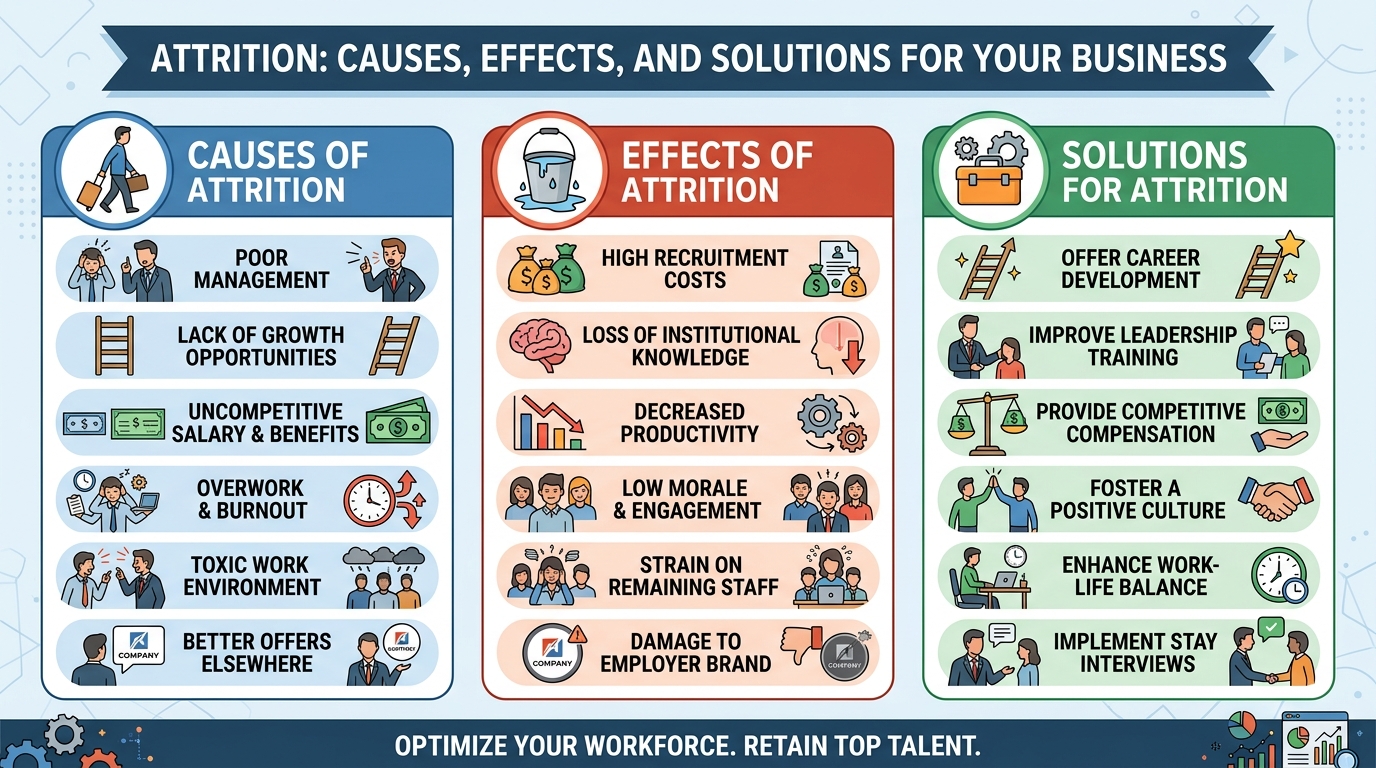
High attrition rates in the workplace often stem from a variety of factors. One significant cause is job dissatisfaction. When employees feel undervalued or overwhelmed, their motivation tends to wane.
Poor management plays a crucial role as well. Employees need supportive leaders who foster growth and communication. A lack of direction can leave them feeling lost and discouraged.
Inadequate compensation also drives talent away. If workers believe their skills aren’t matched by fair pay, they’ll seek opportunities elsewhere.
Additionally, limited career advancement opportunities can lead to frustration. Ambitious individuals crave progress; when it’s absent, they may look for greener pastures.
Workplace culture matters greatly. A toxic environment filled with negativity leads to high turnover rates as employees prioritize their well-being over staying at an unhealthy company.
The Effects of High Attrition Rates on a Business
High attrition rates can severely impact a business’s bottom line. When employees leave frequently, the company faces increased recruitment and training costs. Hiring new talent requires time and resources that could be better spent on growth.
Moreover, constant turnover disrupts team dynamics. Remaining staff may feel overburdened or demotivated as they pick up the slack for departing colleagues. This shift in morale can lead to reduced productivity.
Customer relationships also suffer when experienced employees exit. Familiarity fosters trust, and losing seasoned workers means clients might receive inconsistent service.
Additionally, high attrition damages a company’s reputation in the job market. Prospective employees often research workplace culture before applying; seeing a pattern of high turnover might deter top talent from wanting to join the organization.
In an age where retention is key, businesses need to recognize these effects clearly and take action to create stability within their teams.
Strategies to Combat and Reduce Attrition
To effectively combat attrition, businesses must prioritize open communication. Encourage employees to share their thoughts and concerns. Regular feedback sessions can help identify potential issues before they escalate.
Flexible working arrangements are another powerful tool. Offering remote work or flexible hours shows that you value employee well-being and work-life balance. This adaptability often leads to higher job satisfaction.
Investing in professional development is crucial as well. Providing training opportunities not only enhances skills but also demonstrates a commitment to growth. Employees are more likely to stay when they see a path forward in their careers.
Recognition plays an essential role too. A simple “thank you” or acknowledgment of hard work can significantly boost morale and loyalty among staff members.
Tailoring benefits packages to meet diverse needs ensures that all employees feel valued and understood, fostering long-term retention through personalized support.
Creating a Positive Work Environment
A positive work environment is essential for employee satisfaction and retention. It starts with open communication channels where team members feel heard and valued. Encouraging dialogue fosters trust and collaboration among colleagues.
Workspaces should be designed to promote comfort and creativity. Natural light, greenery, and ergonomic furniture can significantly enhance mood and productivity.
Recognition plays a vital role in creating a supportive atmosphere. Celebrate achievements, both big and small, to boost morale. Simple gestures like acknowledging effort can make employees feel appreciated.
Investing in professional development also contributes to a positive culture. Offering training programs or workshops shows that the organization cares about growth.
Prioritize work-life balance by promoting flexible schedules when possible. This approach helps reduce stress levels while improving overall job satisfaction.
Implementing Retention Strategies
Retention strategies are essential for fostering employee loyalty. They create a solid foundation that encourages team members to stay engaged and committed.
One effective approach is offering professional development opportunities. Employees value growth, so providing training programs can enhance their skills while demonstrating your investment in their future.
Moreover, recognizing achievements boosts morale. Simple gestures like shout-outs during meetings or awards can make employees feel valued and appreciated.
Flexible work arrangements also play a crucial role in retention. Allowing remote work or flexible hours accommodates personal needs and promotes a healthier work-life balance.
Open communication channels facilitate trust between management and staff. Regular check-ins help identify concerns early on, making it easier to address issues before they escalate.
Conclusion
Attrition is a significant concern for many businesses today. Understanding the reasons behind attrition can help leaders develop effective strategies to address it.
By identifying common causes such as lack of career growth, poor management practices, or an unbalanced work-life environment, companies can take proactive steps toward improvement. High attrition rates not only lead to increased recruitment and training costs but also disrupt team dynamics and reduce overall productivity.
Implementing retention strategies is essential. Fostering a positive work culture where employees feel valued and engaged can significantly decrease turnover rates. Regular feedback sessions, professional development opportunities, and recognition programs are just some of the ways businesses can enhance employee satisfaction.
Creating an inviting workplace goes beyond perks; it requires genuine care for employees’ well-being. A supportive environment encourages loyalty and commitment among staff members.
Addressing attrition effectively involves understanding its root causes and taking meaningful action toward creating a fulfilling workplace experience. By prioritizing employee retention through thoughtful initiatives, organizations pave the way for sustained success while minimizing disruptions caused by high turnover rates.
 Mudsr
Mudsr  admin
admin