

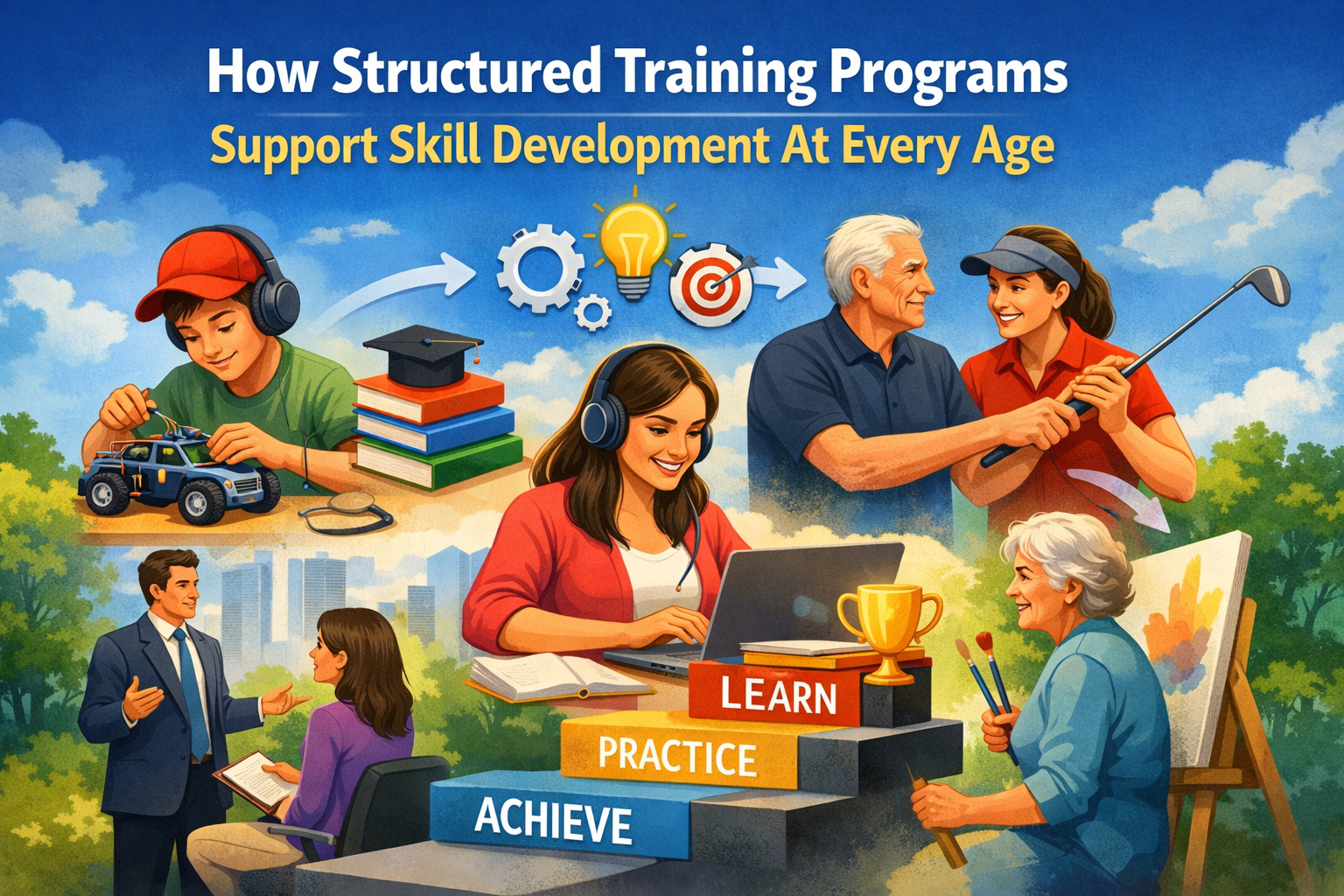
I have spent most of my career around engineered systems. Energy plants, grid infrastructure, industrial controls. The lesson repeats itself. Systems behave best when inputs are consistent and feedback loops are clear. Human learning is not that different. Structure matters more than people like to admit.
There is a romantic idea that skill emerges from passion alone. Practice when you feel like it. Follow curiosity wherever it leads. That works for a few. Most people improve faster inside a framework. Clear goals. Measured progress. Adjustments based on evidence rather than mood.
Structured training is not about rigidity. It is about direction. It gives learners a path they can see and trust. At any age, that sense of direction reduces friction. Less guessing. More doing.
Early Foundations Shape Later Efficiency
Children learn quickly. That part is true. What is less discussed is how easily early habits become permanent. I have watched young learners build efficient movement patterns in weeks. I have also watched them hardwire inefficient ones that take years to unwind.
A well designed youth program pays attention to sequencing. Skills are introduced in a logical order. Each new task rests on a stable base. Feedback arrives quickly and without drama. The result is confidence that comes from competence, not praise.
When a program invites families to experience our exclusive youth training, the real value is not exclusivity. It is structure that respects how developing minds process information. Short cycles of effort. Immediate correction. Repetition with variation. Those design choices matter more than branding ever will.
There is a tendency to assume young learners need entertainment first and discipline later. I disagree. Structure can be engaging when it is transparent. Children respond well when they know what success looks like. They respond even better when success is measurable.
Adults Do Not Start From Zero
Adult learners bring history into the room. Prior skills. Old injuries. Assumptions about what they can or cannot do. Any structured program for adults must account for that baggage. Ignore it and progress slows to a crawl.
I prefer programs that treat adults as partners in the process. Explain the rationale behind each exercise. Show how one skill transfers to another. Invite reflection. Adults appreciate efficiency. They also appreciate honesty about tradeoffs.
When a program describes adult training crafted for you, personalization should be more than a slogan. It should mean adaptable pacing, targeted feedback, and room for recalibration. Life schedules shift. Bodies change. Structure that bends without breaking tends to last.
One opinion that may not be popular. Adults often benefit from more structure than youth. Not less. Time is limited. Attention is fragmented. A clear plan protects scarce energy from being wasted on guesswork.
Feedback Loops Make Progress Visible
In engineering, a system without feedback drifts. Learning does the same. Structured training builds feedback into the routine. Not only at the end of a course. During every session.
Feedback does not have to be complex. It can be a simple metric tracked over time. It can be a coach’s observation recorded immediately. The key is consistency. When learners see cause and effect, motivation becomes self sustaining.
I have seen programs rely on inspiration instead of measurement. The mood is high. Progress is unclear. People leave feeling good but unsure what improved. That uncertainty erodes commitment. Structure replaces ambiguity with evidence.
There is a quiet satisfaction in seeing a skill become reliable under pressure. Not flashy. Just dependable. That reliability is the product of repeated cycles of attempt and correction. Structured environments protect those cycles from interruption.
Transfer Of Learning Across Contexts
A common misconception is that structured training produces narrow competence. Train in one setting, perform only in that setting. The opposite is usually true when design is thoughtful.
Structure clarifies underlying principles. Once principles are understood, they transfer. Balance learned in one task supports performance in another. Timing refined in a controlled drill improves real world execution. The specifics change. The architecture of skill remains.
I have observed this transfer in technical fields and in physical disciplines. The pattern repeats. Teach the why along with the how. Reinforce it through varied practice. Performance generalizes.
Programs that integrate youth and adult pathways under a shared philosophy tend to achieve better continuity. Early learners build a conceptual map. Adult learners refine it. The map evolves but does not disappear.
The Role Of Constraint In Creative Growth
Constraint has a reputation problem. It is seen as the enemy of creativity. I think that view is incomplete. Constraint can focus attention on essentials. It can remove noise that distracts from mastery.
Structured training introduces constraints deliberately. Limited options. Defined tempos. Specific targets. These limits sharpen perception. They reveal inefficiencies that free practice often hides.
Over time, constraints are relaxed. Variation increases. Creativity emerges on a stable base. That sequence mirrors how robust systems are built. Stability first. Flexibility later.
I have watched learners resist constraint at first. Then appreciate it. The shift happens when results become repeatable. Repeatability is a quiet form of freedom.
Motivation That Survives Real Life
Motivation is often treated as a personal trait. Some have it. Others do not. Structure reframes motivation as an outcome of environment. When goals are clear and progress is visible, effort feels justified.
Programs that encourage participants to experience our exclusive youth training or engage in adult training crafted for you should not rely on enthusiasm alone. They should design for adherence. Predictable schedules. Transparent milestones. Support when setbacks occur.
Real life intrudes. Work deadlines. Family demands. Fatigue. Structure does not eliminate these pressures. It provides a way to resume after interruption. A known starting point. A defined next step.
I have seen learners return after long gaps and recover quickly because the framework was intact. Memory fades. Structure remains. That persistence is not accidental.
A Practical View From Long Experience
After decades around complex systems, I trust processes that make performance observable. Structured training does that for human skill. It reduces variability where variability is harmful. It preserves flexibility where flexibility is useful.
Not every program labeled structured deserves the name. Some impose order without purpose. Others measure what is easy rather than what matters. The difference is design discipline. Goals aligned with methods. Feedback tied to outcomes.
Skill development across the lifespan benefits from that discipline. Children gain reliable foundations. Adults gain efficient pathways to improvement. Both gain confidence that rests on evidence.
There is nothing mystical about it. Clear inputs. Consistent practice. Honest feedback. Time. The pattern is familiar. The results, when the design is sound, are hard to argue with.
 Mariah