

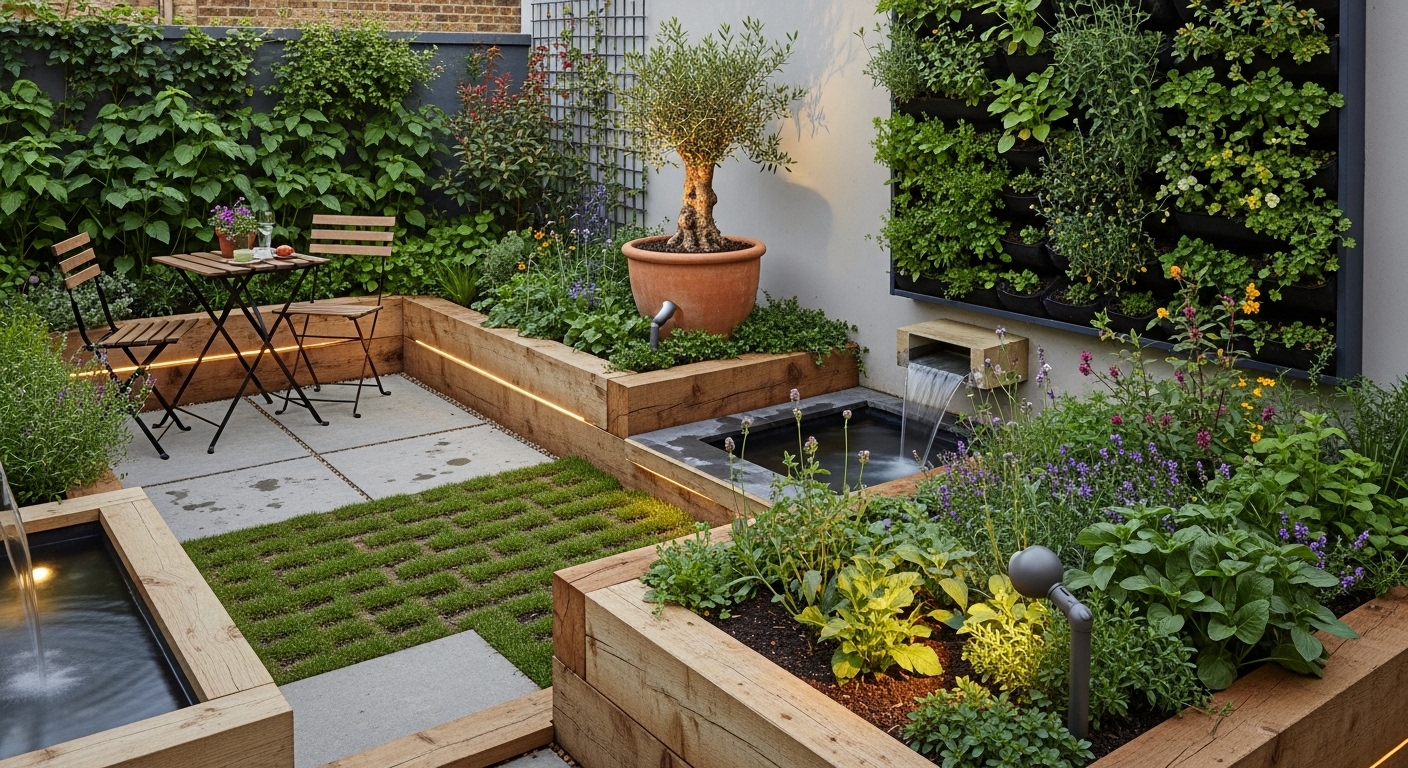
Your garden is like a tiny stage just waiting for its West End debut. In UK cities, that usually means a patch of forgotten grass, a crumbling wall, and a wheelie bin that seems to multiply every council reshuffle.
Left untouched, your outdoor space starts looking more like an abandoned car park than a garden retreat where you’d actually want to spend time.
But with a bit of clever design and strategic planting, even the tiniest plot can become your personal oasis. Let’s explore how to transform that awkward outdoor space into something genuinely worth showing off.
Start With Vertical Growing to Multiply Your Space
When ground space is measured in square feet rather than acres, the only sensible direction is upwards. Vertical gardening lets you stack plants like a horticultural filing cabinet, turning bland walls into living tapestries.
Climbing roses, ivy, and clematis can cover an entire wall in a couple of growing seasons without stealing precious floor space. Trellises, wall planters, and hanging baskets all work together to create layers of greenery that draw the eye upward.
This approach is particularly popular in London and Manchester, where terrace gardens are often squeezed between neighbours’ fences. It’s a simple trick that gives you far more planting area without needing to knock down any walls or argue with the planning office.
Layer Different Heights for Visual Depth
A flat garden is like a one-note song that never quite takes off. By introducing different heights through raised beds, tiered planters, and strategically placed shrubs, you create the illusion of a much larger space.
Start with taller plants at the back or edges and work down to lower groundcovers at the front. This layering technique mimics how natural landscapes unfold, tricking your brain into thinking there’s more garden than there actually is.
Raised beds also give you better control over soil quality, which is a lifesaver if you’re dealing with the heavy clay that plagues much of the UK. You can fill them with decent compost and actually grow plants that thrive throughout the summer instead of stalling in poor soil.
Create Defined Zones With Clever Dividers
Breaking your garden into separate areas makes it feel more expansive, even if those zones are only a couple of metres each. A seating nook here, a herb patch there, and suddenly your garden feels organised and intentionally designed.
Low hedges, bamboo screens, or even a strategically placed pergola can divide the space without blocking light. These dividers create little rooms within the garden, giving each section its own identity and function.
This works brilliantly for urban gardens across Birmingham, Leeds, and Bristol, where the goal is to pack maximum use into minimum square footage. It’s all about smart boundaries that guide movement without making the space feel cramped or cluttered.
Choose Multi-Functional Features That Earn Their Keep
In a small garden, every element needs to serve more than one function. A bench with built-in storage provides seating and additional space for tools or cushions. Meanwhile, a water feature that also functions as a bird bath adds sound, attracts wildlife, and introduces visual interest.
Planters can also function as informal boundaries, and raised beds become seating edges when capped with smooth timber. The trick is to look at every item and ask whether it could serve two or three purposes instead of just one.
This philosophy is essential for UK city gardens where space comes at a premium, and you can’t afford to waste a single corner. Multi-tasking features keep your garden functional without the clutter that makes small spaces feel even smaller.
Incorporate Mirrors and Reflective Surfaces
Garden mirrors are essentially optical trickery at its finest, bouncing light around and making your plot feel twice the size. Position one on a back wall or fence, frame it with climbing plants, and watch visitors do a double-take.
Reflective surfaces like glazed pots, polished metal sculptures, or even a shallow water feature all help scatter light and create a sense of openness. In Britain’s often overcast climate, anything that amplifies available daylight is worth its weight in gold.
Just make sure your mirrors are angled slightly downward to avoid confusing birds, and keep them weatherproof to handle the inevitable drizzle. It’s a simple upgrade that has an almost magical effect on how spacious your garden feels.
Use Containers Strategically for Flexibility and Style
Container gardening is one of the most versatile tools in small garden design. It lets you rearrange plants seasonally and move things around as your mood or the weather shifts. Pots give you complete control over soil, drainage, and placement.
Cluster pots of different sizes and heights to create focal points, or line them along pathways for a structured, formal look. Mixing materials like terracotta, glazed ceramic, and galvanised metal adds texture and keeps things visually interesting.
For UK gardeners dealing with unpredictable weather and variable sunlight, containers make it easy to shuffle sun-lovers into brighter spots and protect tender plants during cold snaps. It’s gardening on your own terms, without committing to permanent beds.
Pick Plants That Perform Year-Round in UK Conditions
In a small garden, you can’t afford to have sections that look brilliant for three weeks and then die back into brown twigs. Choose evergreens, plants, or species that flower in different seasons to keep things lively all year.
Consider mixing structural evergreens like box or yew with seasonal stars such as hellebores for winter, tulips for spring, and salvias for summer. This combination ensures there’s always something worth looking at, regardless of the month.
If you’re unsure which plants will thrive in your specific conditions, professional garden landscaping services can help create a small garden design.
These designs balance year-round interest with low maintenance. They’ll know which species handle shade, clay soil, or exposed positions without constant fussing.
Some reliable year-round performers for UK gardens include:
- Evergreen shrubs like hebes, lavender, and hardy geraniums, which keep the garden looking full and organised all year;
- Ornamental grasses such as Stipa tenuissima that move beautifully in the breeze and look stunning even in winter frost;
- Spring bulbs like crocuses, daffodils, and alliums that pop up early and fade gracefully without leaving a mess;
- Autumn-flowering sedums and asters that keep the colour going right up until the first hard frost.
These plants are tough enough to handle British weather and pretty enough to make your garden a genuinely pleasant place to be, no matter what the calendar says.
Conclusion
So there you have it: your complete roadmap to turning cramped UK urban gardens into spaces that feel purposeful, beautiful, and genuinely usable. Whether you’re stacking plants vertically or layering heights depends on your plot, but now you know exactly what to tackle first.
Don’t wait until your outdoor space is completely overgrown and depressing before you take action. Now go grab a spade and make that tiny plot brilliant.