

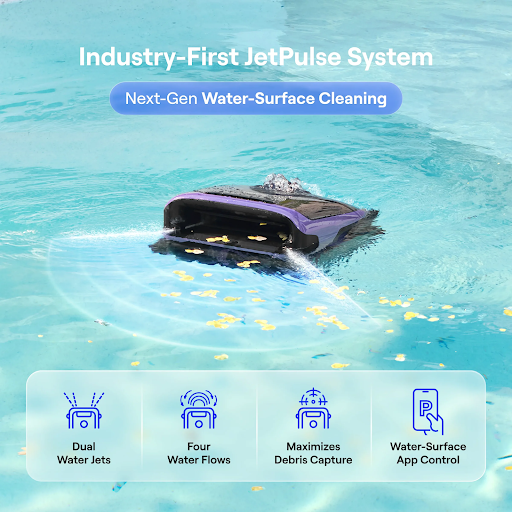
Most homeowners don’t expect their pool to become a recurring task.
At first, it feels simple. Keep it clean, check it occasionally, use it when you want. But over time, something shifts. The pool doesn’t become difficult—it becomes constant.
And that’s where the frustration begins.
Why Pool Maintenance Never Really Ends
The issue isn’t the effort itself.
It’s the repetition.
Leaves settle overnight. Fine debris gathers in corners. The waterline slowly loses its clarity. None of these problems are serious on their own, but they return just often enough to interrupt how the pool is used.
In fact, in many cases, repeated manual cleaning can make long-term maintenance less efficient rather than more controlled.
Over time, the task becomes expected.
Not optional—just part of the routine.
Why Most People Rely on the Wrong Timing
Traditional pool care is based on intervals.
Clean before the weekend. Skim before guests arrive. Do a deeper clean when things look off.
The assumption is that conditions remain stable between those moments.
But in real outdoor environments, they don’t.
Wind, heat, and daily use constantly shift the state of the pool. By the time you respond, the system has already changed again.
This is why even consistent effort often feels like it’s not enough.
The timing is always slightly off.
Because debris and organic buildup don’t accumulate evenly, interval-based cleaning often creates inconsistent results across different areas of the pool.
In many residential settings, inconsistent cleaning patterns can increase total maintenance time by up to 30–40% over a single week, especially during peak summer usage.
This is one of the reasons why pool maintenance is increasingly being treated as a system-level problem rather than a routine task.
When “Quick Fixes” Become a Routine
Most homeowners don’t notice when this pattern becomes routine.
It starts with small adjustments. A quick skim. A minor correction. A decision to deal with something later.
Over time, these quick fixes become expected.
You don’t use the pool without checking it first. You don’t sit by the water without noticing what needs attention. You start thinking about maintenance before you think about using the space.
That’s when the pool stops feeling effortless.
Why Not Every Pool Needs a System Right Away
It’s worth noting that not every setup requires a fully automated solution.
In smaller pools, or in environments with minimal debris, occasional manual cleaning can still be enough—at least for a while.
If conditions stay predictable, the traditional approach can feel manageable.
The shift happens when conditions stop being predictable.
Heavier usage, changing weather, or more complex pool structures introduce variability that manual routines struggle to keep up with.
That’s usually when the gap becomes obvious.
What Changes When Cleaning Becomes Continuous
The biggest difference isn’t about doing more work.
It’s about removing the gaps between cleanings.
Instead of waiting for visible problems to appear, continuous systems maintain the pool in the background. Debris is removed before it accumulates. Surfaces stay consistent without requiring intervention.
This is where a robot pool vacuum starts to change the equation.
It doesn’t just clean—it maintains.
Unlike traditional cleaning, which resets conditions periodically, continuous systems maintain them in real time.
And that distinction is what breaks the cycle of repeated effort.
Why Inground Pools Make the Difference Clear
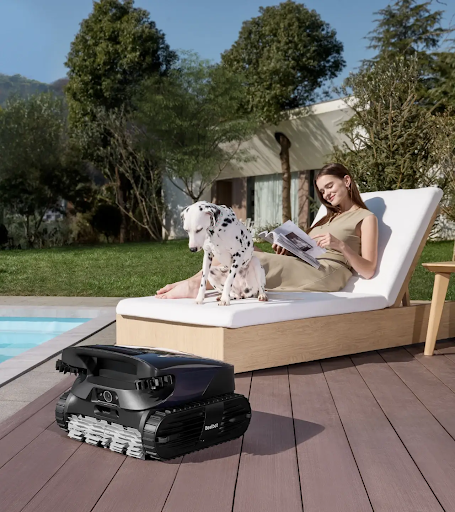
The impact becomes more noticeable in inground pools.
These pools tend to have deeper sections, steps, and uneven surfaces where debris naturally collects. Certain areas require more attention, and inconsistent coverage becomes easier to spot.
Without reliable systems, these spots often need repeated manual correction.
This is where an inground pool vacuum becomes more relevant.
Across the pool maintenance industry, this transition is becoming increasingly visible.
This shift is also reflected in how newer systems — including models like the Beatbot Sora 70 — are designed to address structural inconsistency rather than just surface cleaning.
Instead of simply removing debris, they maintain balance across the entire pool.
That consistency is what changes the overall experience.
When the Pool Stops Interrupting Your Time
The most noticeable shift isn’t technical.
It’s behavioral.
You stop planning around maintenance. You stop delaying use. You stop checking the pool before stepping outside.
The interruptions disappear.
And once they do, the pool becomes what it was supposed to be from the start—something you use, not something you manage.
Conclusion
Pool maintenance doesn’t feel like a chore because it’s difficult.
It feels like a chore because it keeps coming back.
Small issues return just often enough to interrupt how the space is used.
By shifting from occasional cleaning to continuous maintenance, that cycle begins to disappear.
For many homeowners, this isn’t just about convenience.
It’s about finally using the pool the way it was meant to be used—without having to manage it first.
 Mariah