

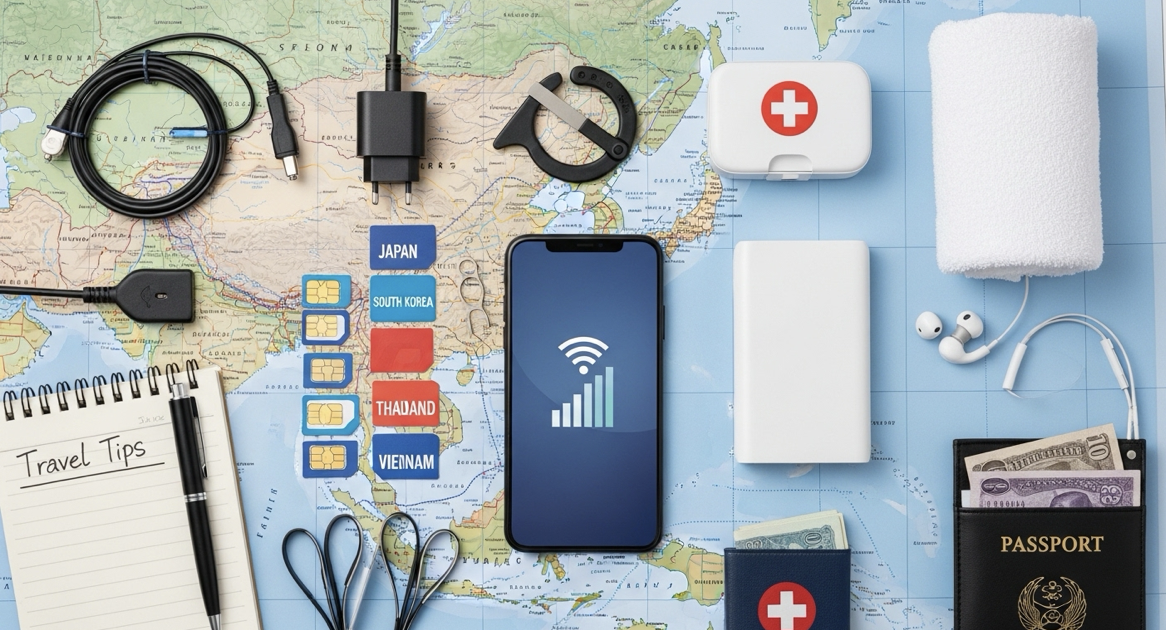
So you’re heading to Asia—awesome! Whether you’re dodging rickshaws in Hanoi, hopping between temples in Bangkok, or getting lost in Tokyo’s neon-lit streets, your phone is basically your lifeline. But here’s the thing: nothing kills travel vibes faster than no signal, surprise roaming charges, or a dead battery when you need Google Maps most.
The good news? With a little prep, you can avoid all that. Let me walk you through exactly what I do before any Asia trip to keep my phone happy, secure, and connected.
First things first: why bother prepping?
Because international roaming can cost you a small fortune. Because not every phone plays nice with Asian networks. And because that app you love might act totally different overseas. A few minutes of setup saves you from:
- Eye-watering phone bills
- Frustrating dead zones
- Being unable to book a ride or find your hotel
- Getting your data snooped on public Wi-Fi
1. Make sure your phone actually works over there
Asia runs on a mix of GSM, LTE, and 5G—so not every phone is welcome. Do yourself a favor:
- Check that your phone is unlocked (not stuck to one carrier).
- See if it supports local bands—especially for places like Japan or South Korea, which can be picky.
- Look into eSIM compatibility if you want to go the digital route.
You can usually find this in your phone’s settings or on the manufacturer’s site.
2. Unlock your phone if you haven’t already
If your phone is locked to, say, Verizon or AT&T, you won’t be able to pop in a local SIM or use an eSIM. Just call your carrier and ask them to unlock it. Most will say yes if your contract is up and the phone is paid off. Easy.
3. Pick your connectivity game plan
You’ve got a few options, and which one you choose depends on your budget and patience:
- International roaming – Super convenient, but prepare to cry at your bill. Fine for a weekend trip, not great for weeks.
- Local SIM card – Cheap and works well, but you’ll need to find a shop, swap cards, and keep track of that tiny piece of plastic.
- eSIM – Honestly, this is my favorite. You buy a plan online, scan a QR code, and boom—you’re connected. No hunting for a SIM vendor.
For a truly stress-free experience, I highly recommend grabbing a Holafly eSIM for your trip to Asia. It covers multiple countries, activates in minutes, and offers unlimited data. Seriously, it’s a game changer for anyone who wants to land and just… go.
4. Back up your stuff (trust me on this)
Phones get lost, pickpocketed, or dropped in toilets. Back up your photos, contacts, and any important docs to Google Drive or iCloud before you leave. Also, save offline copies of your flight confirmations and hotel bookings. Future you will be grateful.
5. Download these essential apps ahead of time
Don’t wait until you land and have sketchy airport Wi-Fi. Get these now:
- Maps: Google Maps, Maps.me (offline maps save the day)
- Translation: Google Translate with offline language packs
- Ride-hailing: Grab, Gojek, Uber (depends on the country)
- Booking: Agoda, Booking.com, Airbnb
- Currency converter: XE or similar
Set them up at home so they’re ready to roll.
6. Go offline as much as you can
You won’t always have signal—especially on trains, in the mountains, or on remote islands. Prep for that:
- Download offline maps of the cities you’re visiting
- Save screenshots of your hotel address, passport, and key reservations
- Keep a photo of your visa if you need one
This tiny step has saved my butt more times than I can count.
7. Lock down your security
Traveling makes your phone a bigger target. Do this before you go:
- Use a strong password or fingerprint/face lock
- Turn on “Find My Device” (or Apple’s equivalent)
- Install a VPN for when you’re on public Wi-Fi at cafes or airports
- Avoid logging into your bank account on unsecured networks
8. Keep your data from disappearing too fast
Even if you have unlimited data, nobody likes a slow connection. Tame your phone:
- Turn off background app refresh
- Stop auto-playing videos in social media apps
- Use Wi-Fi whenever it’s safe (but still use that VPN)
9. Don’t forget about power
Asian outlets look different everywhere you go. One country uses two flat pins, another uses three round ones. Bring a universal travel adapter and a decent power bank. Also, stick to good-quality charging cables—cheap ones die fast.
10. Give your bank a heads-up
Nothing ruins a trip like your card getting declined for “suspicious activity.” Call your bank and tell them you’ll be in Asia. Ask them to enable international transactions. Also make sure your SIM or eSIM can receive SMS in case you need a verification code.
Wrapping it up
Getting your phone ready for Asia isn’t just about having signal—it’s about staying safe, saving money, and actually enjoying your trip instead of wrestling with tech problems. A little prep goes a long way.
And if you want the easiest, most hassle-free way to stay connected, grab an eSIM for your trip and focus on the fun stuff: the street food, the temples, the chaos, the beauty. You’ve got this. Safe travels!
 Mariah