

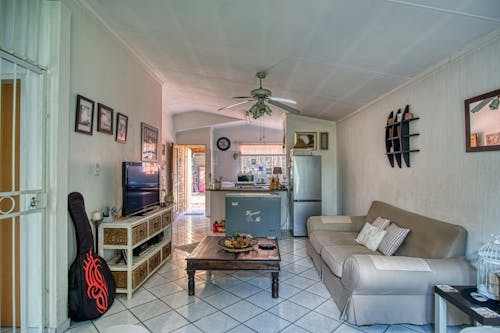
In Grand Rapids, people tend to look at basements, attics, even that odd stretch under the stairs, and think storage first, living space later—if ever. But unused space is rarely useless, it’s just undefined. The shift begins when you stop labeling an area as “extra” and start treating it as part of the home’s core footprint. A cold basement, low ceiling, exposed pipes—none of that disqualifies it. It only sets constraints. And constraints are workable. You measure, you walk the space a few times, maybe at different hours, notice how light moves or doesn’t, how the air feels. Some areas feel tight in the morning but open up later, or the opposite. That matters.
People rush here, they sketch big ideas too early. That usually leads to wasted effort. Instead, stand in the space and think small first. A chair fits here. A desk might work there. Then expand. The function builds outward from those small anchors. Not the other way around.
Defining Purpose Before Design
Function comes before finish. Always. If the space doesn’t serve a clear role, it will drift back into storage, no matter how nice it looks. So decide early—is this a quiet office, a guest room, a play area, or something mixed? Mixed spaces work, but they need boundaries, even if those boundaries are just visual. Rugs help. Lighting too. A change in ceiling height, if you have it, can split the room without walls.
And the purpose shouldn’t fight the space. Low ceilings don’t suit a gym with overhead lifts, but they’re fine for a media room. A basement with little natural light can still be a solid office if the lighting is layered right. You adjust expectations, not abandon them. Around this point, people often start searching for help, and that’s where Grand Rapids basement finishing companies come into the picture, not as a first step but as support once the idea has shape.
Working with Light, Not Against It
Light changes everything, yet it’s often treated as an afterthought. In unused spaces, especially below ground, you won’t always get more natural light, so you build your own system. Overhead lighting alone feels flat, almost clinical. You need layers—floor lamps, wall lights, maybe a strip tucked behind a beam. The goal isn’t brightness; it’s balance. Too much light in one spot, nothing in another, and the room feels off.
Color plays into this. Lighter walls can help, but pure white sometimes makes a basement feel colder. Slightly warm tones work better. Soft gray, muted beige, even a pale green. Nothing loud unless the space has a lot of light already. And surfaces matter. Matte finishes absorb light; semi-gloss reflects it a bit. You mix them, not evenly, just enough to keep the room from feeling flat.
Layout That Feels Natural
Furniture placement decides whether a space works or not. You can have the right pieces but still end up with something awkward. Start by leaving space empty. Then add one item, see how it feels, move it, adjust. It’s slower, but it works.
Traffic flow matters more than symmetry. People should be able to move through without thinking about it. If they have to sidestep a chair every time, the layout is wrong. And not every wall needs to be used. Empty space is part of the design, even if it looks unfinished at first. It won’t feel that way once everything settles.
Sometimes you’ll try a layout that looks good on paper but feels off in reality. That’s normal. You change it. No big reset, just small shifts. A couch angled slightly, a desk pulled away from the wall. Those changes add up.
Storage Without Letting It Take Over
Unused spaces often become storage zones because there’s nowhere else for things to go. When you convert the area, that storage doesn’t disappear. It has to be integrated. Built-ins help, but they’re not required. Simple shelves, closed cabinets, and even storage benches can do the job.
The key is control. If storage spreads randomly, the room loses its purpose. So you contain it. One wall, one corner, defined and limited. Everything else stays clear. It’s a small rule, but it keeps the space from slipping back into clutter.
Dealing with Comfort—Temperature, Sound, Air
Comfort isn’t obvious at first, but it decides whether the space gets used. Basements can be cold, sometimes damp, and ignoring that leads to a room that looks finished but feels wrong. Insulation helps, obviously, but so does simple layering—rugs, curtains, upholstered furniture. They hold warmth.
Sound is another factor. Hard surfaces bounce noise, which can make a small area feel loud and tense. You soften it with fabric, even a single large rug can change the feel. And air circulation matters more than people expect. A space with still air feels stale fast. You might need a fan, maybe a small vent adjustment. Nothing complex, just enough to keep air moving.
Letting the Space Evolve
Not everything has to be solved at once. In fact, it shouldn’t be. You finish the basics, then live with it. Use the space for a few weeks. Notice what works, what doesn’t. Maybe the desk needs to move, or the lighting feels too harsh at night. You adjust.
And sometimes the purpose shifts. A reading nook becomes a workspace. A guest room turns into a hobby area. That’s fine. The goal isn’t to lock the space into one identity forever. It’s to make it usable, flexible enough to change without starting over.
Avoiding Overdesign
There’s a point where adding more stops helps. Extra decor, more furniture, too many colors—it clutters the space mentally, not just physically. You don’t need to fill every gap. Let some areas stay quiet.
And perfection isn’t required. Slight mismatches, uneven spacing, a lamp that’s not centered—they don’t ruin the space. Sometimes they make it feel more real. Less staged. Turning unused space into a functional living area isn’t about transformation in one dramatic step. It’s gradual. You define the purpose, shape the layout, adjust for comfort, and let the room settle into itself. Some parts will feel unfinished for a while. That’s part of it. Over time, the space stops feeling like an afterthought and starts working like the rest of the house—quietly, consistently, without needing attention.