

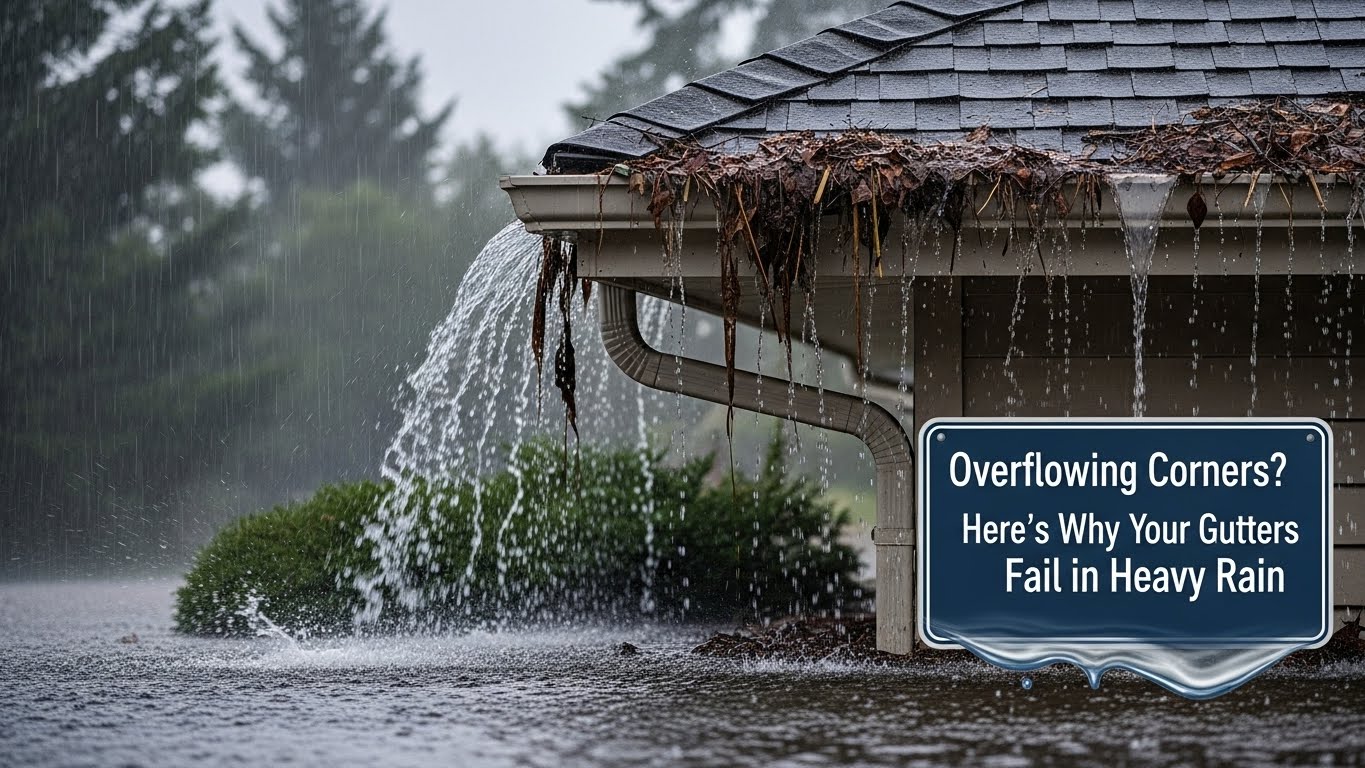
If you’ve ever stepped outside during a storm and noticed water pouring over the corners of your gutters, you’re not alone. Overflowing gutter corners are one of the most common drainage problems homeowners face. While it might look minor at first, the long-term effects can be serious, including siding damage, fascia rot, basement leaks, and foundation problems. Understanding why corners fail during intense rainfall can help you stop the issue before it escalates. Here are the most common causes of gutter corner overflow and what you can do about them.
-
Clogged Gutters Are the Top Culprit
Leaves, twigs, seed pods, roof granules, and debris naturally collect in gutters over time. When a gutter becomes clogged, water can’t flow freely through the system. Instead of draining toward the downspouts, it backs up.
Signs your corners are clogged:
- Water spilling over the corner or edge
- Standing water inside the gutter
- Visible debris buildup
Solution: Clean gutters twice a year, or more frequently if you have overhanging trees. Installing gutter guards can significantly reduce clogging and corner overflow.
-
Downspouts May Be Too Few or Too Small
Even if your gutters are clean, they can overflow in heavy rain if the downspouts can’t handle the volume of water coming off your roof. This is especially common on homes with long gutter runs or steep roof pitches.
A downspout problem may be the cause if:
- Overflow happens during heavy rain but not light rain
- Only certain corners overflow
- Water pools near downspout openings
Solution: Add additional downspouts or upgrade from small 2×3-inch downspouts to larger 3×4-inch ones to increase capacity.
-
Improper Slope Causes Water to Pool
Gutters must be installed at a slight angle to move water toward the downspouts. If a corner sits at the low point instead of the downspout location, water will collect there and spill over.
How to spot poor slope:
- Water remains in the gutter after rainfall
- The gutter looks level or sags
- Overflow happens consistently at the same corner
Solution: Have a professional adjust the pitch to ensure water flows naturally toward downspouts.
-
Leaking or Damaged Corner Seams
Gutter corners are joined together with a sealant, and over time that sealant can crack, shrink, or separate. When water hits a leaking corner seam at high speed during a storm, it spills out rapidly.
Solution: Re-seal the corner seam with exterior-grade gutter sealant or replace badly damaged sections.
-
Undersized Gutters Can’t Handle Heavy Rainfall
Older homes often have 4 or 5-inch gutters that were never designed for today’s frequent heavy storms. If your roof is large, steep, or located in a high-rainfall area, your gutters may simply be too small.
Solution: Upgrade to 6-inch gutters, which carry significantly more water and reduce corner overflow.
Conclusion
Corner overflow isn’t just a nuisance, it’s a warning sign. Whether caused by clogs, poor design, or improper installation, overflowing gutters can lead to major water damage if ignored. By understanding these common issues and addressing them promptly, you can keep your gutter system functioning smoothly, even in the heaviest downpour.